When Will Climate Change Be Irreversible? Understanding Earth’s Tipping Points
Climate change becomes irreversible when Earth’s systems cross critical thresholds called tipping points, beyond which self-reinforcing changes continue even if we stop emitting greenhouse gases. The Global Tipping Points Report 2025 confirms we’re already witnessing this transition: at 1.4°C of global warming, warm water coral reefs are crossing their thermal tipping point and experiencing unprecedented dieback that no amount of emissions reduction can reverse.
But here’s what “irreversible” actually means in climate science, and why the question you’re asking requires a more nuanced answer than a single date. Some changes, like the loss of Arctic summer sea ice or the collapse of major ice sheets, operate on different timescales and respond to different temperature thresholds. We’ve crossed certain points of no return while others remain preventable if we act within narrow windows measured in years, not decades.
The anxiety behind your search is understandable. As global warming approaches 1.5°C, Earth’s climate and nature are already passing tipping points that trigger cascading changes with catastrophic consequences for billions of people. These effects amplify throughout our interconnected world, turning regional shifts into global disruptions.
This article clarifies what science tells us about the timeline of climate irreversibility in 2026. You’ll learn which tipping points we’ve already crossed, which critical thresholds lie immediately ahead, and crucially, what differences our actions over the next few years can still make. Understanding the distinction between what’s lost and what remains saveable is essential for channeling concern into effective action rather than paralysis.
What Climate Irreversibility Actually Means
Climate irreversibility describes the point at which certain changes to Earth’s systems become impossible to undo within any timeframe that matters to human civilization. Unlike a temperature dial you can simply turn down, crossing climate tipping points triggers self-reinforcing processes that continue regardless of whether we stop emissions immediately.
Think of it like pushing a boulder uphill versus watching it roll down the other side. Most current climate impacts fall into the first category: if we reduce emissions, temperatures eventually stabilize and some effects can slowly reverse. But tipping points represent the crest of the hill. Once crossed, systems tip into new states that persist for centuries or millennia, regardless of human intervention.
- Tipping Point
- A critical threshold where a small amount of additional warming triggers large, accelerating, and often irreversible changes to a climate system.
- Earth System Tipping Point
- A threshold in major planetary systems such as ice sheets, ocean currents, or forests that, when crossed, could trigger cascading changes with catastrophic consequences for people and the planet.
- Cascading Effects
- When one tipping point triggers changes that push other systems toward their own thresholds, creating a domino effect amplified throughout our globalized world.
- Irreversible Change
- Transformations that cannot be undone on human timescales, even if the original trigger is removed.
The distinction between localized and global irreversibility matters enormously. Coral reefs dying at 1.4°C of warming represents localized irreversibility: entire ecosystems collapse permanently, devastating millions who depend on them, but the impact doesn’t directly destabilize the entire planet. Contrast this with potential collapse of the Atlantic Ocean circulation or disintegration of major ice sheets, which would fundamentally alter global climate patterns and sea levels for thousands of years.
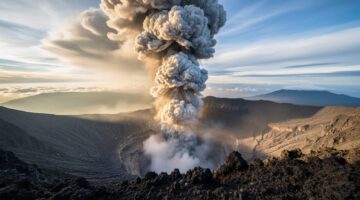
Interestingly, some dramatic natural events like volcanic impact on climate can temporarily cool the planet but remain reversible because they don’t fundamentally alter the underlying climate system. True tipping points, however, rewire how Earth’s systems function at a basic level, creating new equilibrium states that resist returning to previous conditions.
How Earth’s Climate Tipping Points Work
Climate tipping points function like dominoes arranged on a tilted surface, once the first one falls, it sets off a chain reaction that continues under its own momentum. Unlike gradual climate changes that respond proportionally to warming, tipping points represent critical thresholds where Earth’s systems shift into fundamentally different states that sustain themselves even if we stop adding greenhouse gases.
The core mechanism is the feedback loop. When warming crosses a certain threshold, it triggers processes that generate more warming, independent of human emissions. Consider Arctic sea ice: white ice reflects sunlight back to space, keeping the region cool. As warming melts this ice, it exposes dark ocean water underneath, which absorbs far more heat. This absorbed heat melts more ice, exposing more dark water, accelerating warming in what scientists call the ice-albedo feedback. The process feeds on itself.
Several major feedback mechanisms are already activating at current warming levels:
- Ice sheet disintegration, meltwater lubricates glacier bases, speeding their slide into oceans while darker exposed rock absorbs more heat
- Forest dieback, drought-stressed trees die and burn, releasing stored carbon while eliminating the forests that would have absorbed future emissions
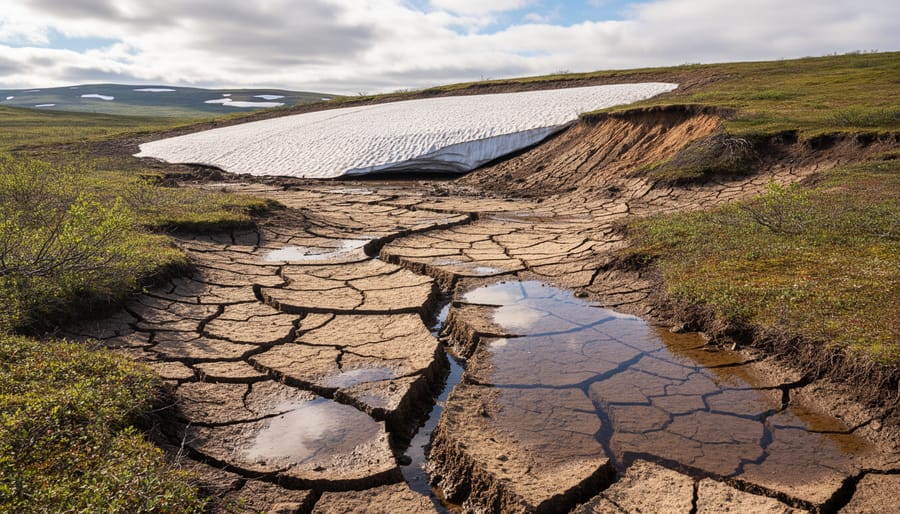
- Permafrost thaw, frozen Arctic soils melt, releasing methane and carbon dioxide that drive further warming and more thawing
- Ocean circulation disruption, freshwater from melting ice alters ocean currents that regulate global heat distribution
What makes these processes irreversible on human timescales is that they develop their own internal momentum. Stopping emissions doesn’t stop the meltwater lubricating Greenland’s glaciers or the methane escaping from thawed permafrost. These processes can continue for decades or centuries after we’ve reduced atmospheric carbon dioxide levels.
The cascading nature compounds the danger. When the Amazon rainforest crosses its moisture threshold and transitions toward savanna, it doesn’t just affect Brazil, it disrupts rainfall patterns across South America and releases billions of tons of stored carbon that accelerate other tipping points worldwide. The effects transmit and amplify throughout our globalized world, as one system’s collapse destabilizes others in interconnected chains.
This interconnection means crossing one tipping point increases the likelihood of crossing others, potentially triggering a domino effect across Earth’s climate system. The time lag between crossing a threshold and experiencing full consequences can span generations, but the commitment to those consequences locks in much faster, sometimes within years of passing the critical point.
Tipping Points We’re Approaching, or Have Already Crossed
The 1.5°C Threshold and What It Means
The 1.5°C threshold represents more than an arbitrary target. Scientists selected this limit because their models show that warming beyond it significantly increases the probability of triggering multiple, interconnected tipping points simultaneously. The Global Tipping Points Report demonstrates that Earth is already approaching the 1.5°C tipping threshold with current warming reaching 1.4-1.5°C above pre-industrial levels.
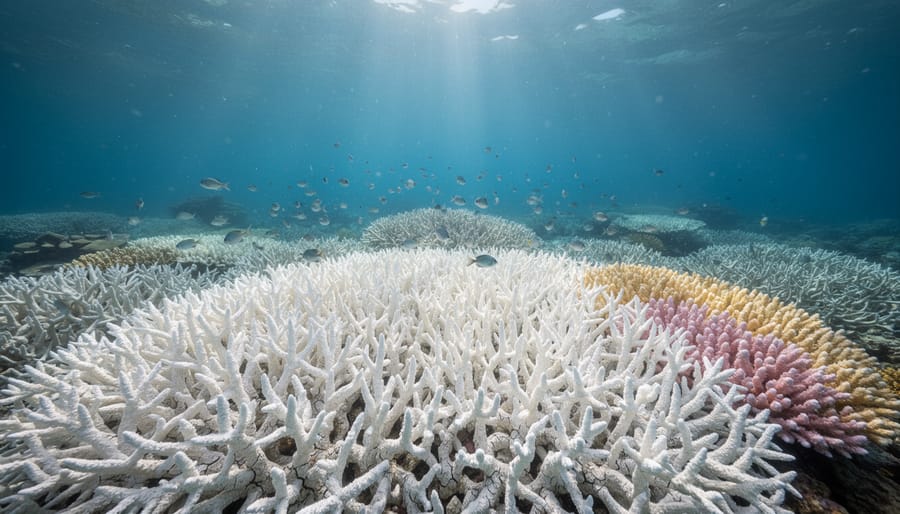
At this level of warming, we’re witnessing the first major biosphere collapse: warm water coral reefs crossing their thermal tolerance point. This isn’t a future risk but a present reality, marking the first confirmed planetary-scale tipping point we’ve crossed.
The critical question is whether temporarily overshooting 1.5°C, say, reaching 1.6°C before bringing temperatures back down through emission reductions, carries the same consequences as permanently remaining above that threshold. The answer depends on timing and magnitude. Some systems, like coral reefs, respond to peak temperatures and may not recover even if we later reduce warming. Others, like certain ice sheets, operate on century-to-millennial timescales where the duration above the threshold matters as much as the peak temperature itself.
This distinction matters enormously for policy. While limiting global warming in 2020 and beyond remains critical, a brief overshoot that’s quickly reversed creates different risks than settling into a permanently warmer world. Every tenth of a degree matters, and the speed at which we act determines which tipping points we can still avoid triggering.
Tipping Points Already in Motion
At 1.4°C of global warming, where we stand in 2026, we’re no longer talking about future possibilities. We’ve already crossed into a new reality. The Global Tipping Points Report 2025 confirms that warm water coral reefs, ecosystems supporting a quarter of all marine species and hundreds of millions of people, are experiencing reefs crossing a thermal tipping point and unprecedented dieback. This isn’t a warning sign, it’s a system failure already in progress.
For coastal communities from the Philippines to the Caribbean, this translates to disappearing fishing grounds, eroding shorelines that once had natural barriers, and tourism economies collapsing. The cascading effects ripple far beyond the reefs themselves. When coral ecosystems die, they don’t recover on human timescales, even if ocean temperatures eventually stabilize. The biodiversity loss is permanent, the protein sources for millions are gone, and coastal protection vanishes precisely when storm intensity is increasing.
Other systems are flashing warning signals. Scientists observe concerning patterns in Greenland’s ice sheet melt rates, changes in Amazon rainforest moisture recycling, and slowdown indicators in Atlantic Ocean circulation. These haven’t fully tipped yet, but they’re showing the same early destabilization that preceded coral collapse. The practical meaning is stark: some damage is now baked in, affecting real people and ecosystems today, not in some distant future.
Types of Climate Tipping Points
Scientists classify climate tipping points into distinct categories based on the Earth systems they affect, each carrying different timescales and consequences. Understanding these categories reveals why some changes demand more immediate attention than others, and how their interactions can amplify overall risk.
Biosphere tipping points involve living ecosystems that regulate climate through carbon storage and moisture cycles. Tropical rainforests, particularly the Amazon, can flip from carbon sinks to carbon sources when drought and deforestation push them past a threshold. As we’ve already seen at 1.4°C warming, warm water coral reefs are crossing their thermal tipping point, fundamentally altering marine ecosystems that support hundreds of millions of people. Boreal forests in northern regions face conversion to grasslands as warming enables bark beetle outbreaks and intensifies wildfires.
Cryosphere tipping points center on ice and frozen ground. The Greenland and West Antarctic ice sheets contain enough water to raise sea levels by meters, and both show signs of accelerating melt that could become self-sustaining. Arctic permafrost holds twice as much carbon as the atmosphere; its thaw releases methane and CO₂ that further accelerate warming. Summer sea ice loss reduces Earth’s reflectivity, creating a feedback loop that amplifies Arctic heating far faster than global averages.
Atmospheric and ocean circulation tipping points involve the planet’s heat and moisture transport systems. The Atlantic Meridional Overturning Circulation, which moderates European and North American climates, shows weakening trends that could lead to abrupt reorganization. Monsoon systems supporting billions of people can shift toward new rainfall patterns, permanently altering agriculture and water availability across vast regions.
Regional versus global scale matters for urgency and impact. While coral reef collapse is devastating for reef-dependent communities, it won’t directly trigger global system failure. In contrast, ice sheet disintegration or circulation breakdown would transmit and amplify effects throughout our globalized world, cascading through food systems, economies, and habitability zones. The most concerning scenario involves multiple tipping points reinforcing each other, Amazon dieback releasing carbon that accelerates ice melt, which disrupts ocean circulation, which shifts monsoons, creating a domino effect far more dangerous than any single threshold.
What Irreversible Climate Change Means for People and the Planet
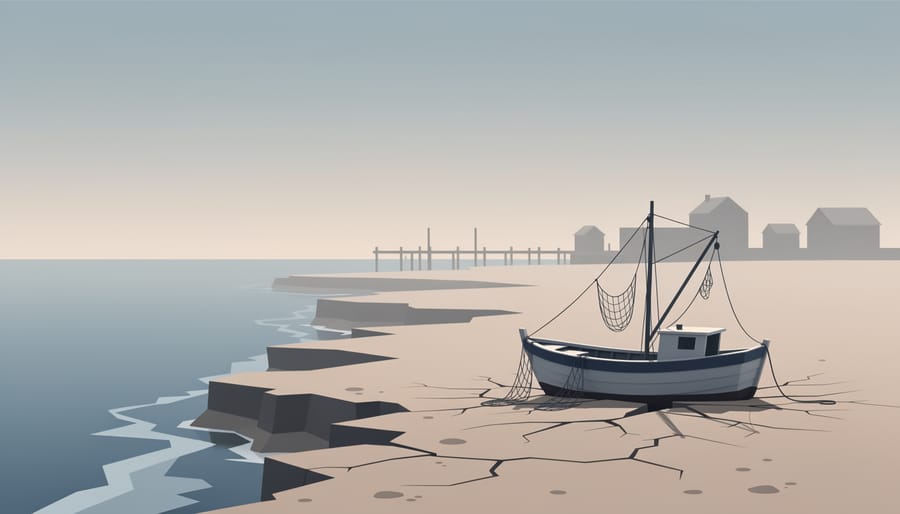
Tipping points aren’t abstract scientific thresholds, they reshape the physical foundation of human civilization. When coral reefs die, fishing communities lose their protein source and coastal protection. When ice sheets collapse, sea levels rise for centuries regardless of future emissions. When monsoon patterns shift, agricultural systems that fed billions for millennia fail within a generation.
The cascading nature of these changes amplifies their reach far beyond the initial trigger point. Consider how interconnected systems transmit shocks: crop failures in one region drive food prices globally, sparking unrest continents away. Melting permafrost releases methane that accelerates warming, which intensifies extreme weather that damages infrastructure and disrupts supply chains worldwide. A tipping point crossed in the Arctic reverberates through economic markets, migration patterns, and political stability across the planet.
Communities on the frontlines already live with irreversible changes. Small island nations like Kiribati and Tuvalu are relocating entire populations as saltwater intrusion makes their lands uninhabitable, not in some distant future, but now. Arctic Indigenous communities watch traditional hunting grounds disappear as sea ice vanishes earlier each spring and returns later each fall, erasing knowledge systems developed over thousands of years. Reef-dependent regions from the Great Barrier Reef to the Coral Triangle face the collapse of ecosystems that support over 500 million people’s livelihoods and food security.
The human toll manifests across multiple systems simultaneously:
- Displacement of 200 million to 1 billion people by 2050 as coastal areas and agricultural zones become uninhabitable
- Collapse of fisheries and staple crop yields in regions already facing food insecurity
- Water scarcity affecting billions as glaciers that feed major rivers disappear and rainfall patterns fundamentally shift
- Economic losses in the trillions as critical infrastructure, entire industries, and regional economies become unviable
- Mass extinction of species that support ecosystem services humans depend on for pollination, water filtration, and climate regulation
The poorest communities, who contributed least to the problem, face disproportionate harm. Subsistence farmers cannot simply relocate when rains fail permanently. Coastal fishing villages lack the capital to rebuild inland. These aren’t future projections, the disruption has already begun, and crossing additional tipping points will accelerate suffering on a scale that challenges our capacity to respond.
Can We Still Prevent Irreversible Damage?
The honest answer is both sobering and actionable: we cannot undo what’s already crossed, but we can still prevent the most catastrophic cascading failures. The difference between 1.6°C and 2.5°C of warming is massive in terms of which tipping points get triggered and how many billions of people face displacement, food insecurity, or uninhabitable conditions.
What’s already locked in includes significant coral reef loss, accelerated ice sheet melting, and continued sea level rise for centuries. These processes carry momentum that persists even if we stopped all emissions tomorrow. The warm water coral reefs crossing their thermal tipping point at 1.4°C represent ecosystems we cannot fully restore to their pre-industrial state within human timescales.
What remains within our control is whether we limit warming to levels that keep additional major tipping points from cascading. Preventing the Amazon rainforest from collapsing into savanna, keeping the Greenland ice sheet from complete disintegration, and maintaining Atlantic Ocean circulation patterns all depend on how quickly we cut emissions in the next decade. Research shows that rapid decarbonization starting now can stabilize warming below 2°C, preventing the worst-case scenarios where multiple tipping points reinforce each other.
The critical distinction is between limiting and preventing. We may not prevent individual tipping points from being crossed, but we can limit how many cross and how severely they cascade through interconnected systems. Every tenth of a degree matters because it represents entire ecosystems, coastal cities, and agricultural regions that either adapt or collapse.
Adaptation strategies must run parallel to emission cuts. Communities facing irreversible local changes need resources to relocate, diversify food sources, and build resilience. This isn’t accepting defeat; it’s acknowledging that preventing all damage is no longer possible while preventing the worst outcomes absolutely remains achievable. The window is narrow, but action taken this decade directly determines which version of 2050 we inhabit.
Common Questions About Climate Irreversibility
What exactly is a climate tipping point?
A climate tipping point is a threshold where small changes in warming trigger large, self-reinforcing shifts in Earth’s systems. Once crossed, these changes continue even if we stop emitting greenhouse gases, because feedback loops take over, like melting ice exposing darker ocean water that absorbs more heat, causing more melting.
How close are we to crossing major tipping points?
We’re already crossing some. The Global Tipping Points Report 2025 found that at 1.4°C of warming, warm water coral reefs are passing their thermal tipping point and experiencing unprecedented dieback. As we approach 1.5°C, several other systems including ice sheets and forests are nearing critical thresholds.
Will overshooting 1.5°C push us over climate tipping points?
Some tipping points may be triggered even with temporary overshoots, while others depend on how long temperatures stay elevated. The longer we exceed critical thresholds, the higher the risk of crossing points of no return, particularly for ice sheets and ocean circulation patterns.
Can tipping points be reversed once crossed?
Most cannot be reversed on human timescales. While some localized changes might recover over centuries if warming stops, major systems like ice sheet collapse or rainforest dieback become self-perpetuating and would persist for thousands of years regardless of future emissions.
The urgency of these timelines underscores why immediate action matters. Each fraction of a degree we prevent increases our chances of avoiding the most catastrophic cascading effects. Efforts to increase renewable energy deployment and accelerate solutions like solar energy for climate mitigation directly influence which tipping points we cross and when.
The difference between acting now versus in five years could determine whether billions of people face manageable adaptation challenges or catastrophic disruption. While we’ve already locked in some changes, the scope and severity of future impacts remain within our influence through the choices we make today.
The question of when climate change becomes irreversible doesn’t have a single answer because we’re experiencing multiple transitions simultaneously. Some tipping points, like the thermal threshold for warm water coral reefs at 1.4°C, have already been crossed. Others loom on the near horizon as we approach 1.5°C of warming. Yet the timeline for catastrophic, cascading changes across Earth’s interconnected systems remains within our influence.
What happens next depends entirely on decisions made in the coming years. Every tenth of a degree we prevent matters profoundly. Limiting warming to 1.6°C instead of 2°C, or 2°C instead of 3°C, translates directly into billions of lives protected, ecosystems preserved, and communities spared from displacement. The physics is unforgiving, but the math is also clear: rapid emission reductions can still prevent the worst outcomes.
This isn’t a moment for resignation. It’s a call to informed action. Support policies that accelerate the transition away from fossil fuels. Stay engaged with climate science as it evolves. Recognize that preventing complete catastrophe remains possible, and that every effort to slow warming reduces long-term harm to both people and the planet we share.