Silicon Lithium Batteries: How Silicon Anodes Are Made, Who Can Use Them, and Where to Get Help
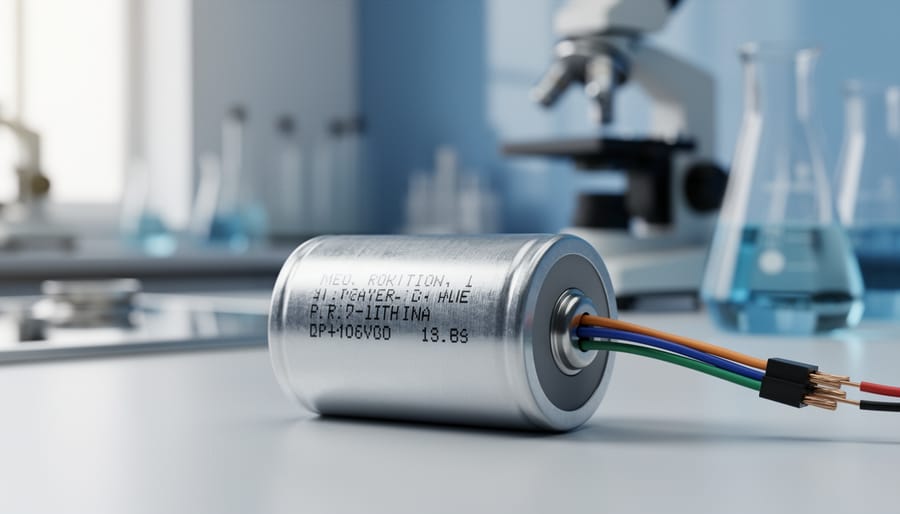
A silicon lithium battery is a lithium-ion battery whose anode, the electrode that stores lithium during charging, contains silicon in place of, or blended with, the graphite used in most cells today. The reason is simple physics: silicon can hold roughly ten times more lithium per gram than graphite in theory, which opens a path to longer-range electric vehicles, slimmer phones, and lighter storage without changing the basic chemistry readers already know.
The catch is just as clear. Silicon swells by up to about 300 percent as it absorbs lithium, then shrinks again on discharge. That repeated expansion cracks particles, drains capacity, and shortens life. Most commercial cells therefore use a small share of silicon mixed into graphite, or engineered forms such as silicon-carbon composites and silicon oxide, to capture the gains while taming the swelling.
Why does this matter beyond the lab? Better batteries shape how fast we can cut emissions, and they sit alongside other climate drivers that determine how quickly the energy transition moves. This article explains how silicon anodes are made, which products and manufacturers use them, what standards and sustainability rules apply, where the real-world case studies stand, and where to find reliable, current guidance.
What a Silicon Lithium Battery Is and How Silicon Fits Into Battery Production
From Sand to Anode: The Silicon Production Chain
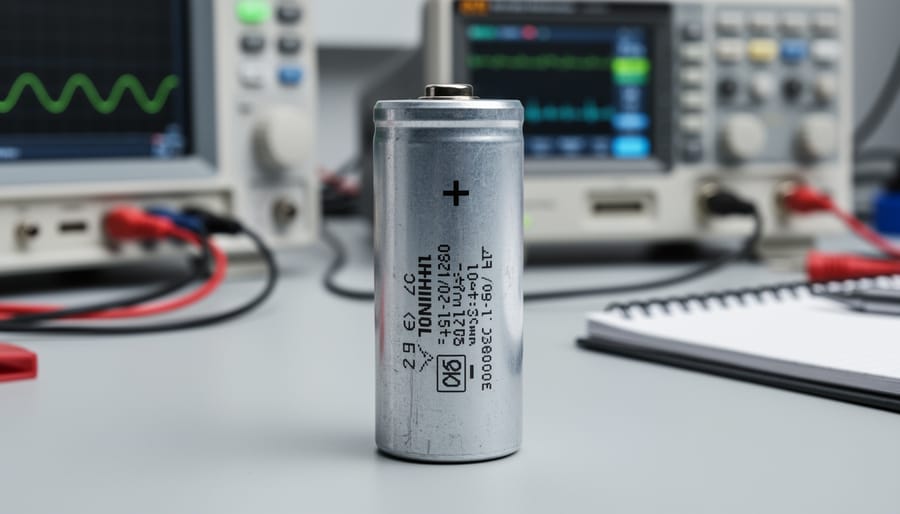
Every silicon anode begins with something ordinary: quartz, or silica sand. Producers heat it with a carbon source in an electric arc furnace to strip away the oxygen, yielding metallurgical-grade silicon. That material is already made at enormous scale for aluminum alloys and silicones, and it’s the starting point for most battery routes.
Metallurgical silicon isn’t clean enough for a cell, though. It needs further purification to cut metal contaminants that could trigger unwanted reactions inside the battery. Some makers instead build silicon from silane gas, a route that gives very high purity and fine control over particle structure, though it adds cost and complexity.
Next comes particle engineering, where the real innovation happens. Manufacturers mill the silicon down to nanoscale particles, grow it as nanowires, or build porous structures with built-in space to expand. Others make silicon oxide composites, which swell less but sacrifice some capacity. Each choice trades energy density against durability and price.
Because bare silicon degrades quickly, particles are usually coated with a thin carbon shell, often applied by heating them in a hydrocarbon gas. This layer improves conductivity and shields the silicon from the electrolyte. The finished material is then blended with graphite, commonly at a few percent up to roughly a fifth of the anode by weight today, mixed with a binder and coated onto copper foil as an electrode.
What about the footprint? Furnace smelting, high-temperature coating and gas-phase synthesis are all energy-intensive, and emissions depend heavily on the electricity mix powering each step. Independent life-cycle assessments reach varying conclusions, since results hinge on the process route and the grid. The encouraging point is that these are engineering choices. Manufacturers that source cleaner power and recycle process waste can meaningfully reduce the impact, which is why asking suppliers for carbon-footprint data is a sensible habit.
Why Silicon Swells and How Manufacturers Tame It
When a lithium-ion cell charges, lithium ions move into the anode. Graphite handles this politely, expanding by roughly ten percent. Silicon takes in far more lithium, which is exactly why it stores more energy, but its volume can swell by around 300 percent at full charge. Then it shrinks again on discharge.
That repeated breathing is the core problem. Large silicon particles can crack, lose electrical contact with the rest of the electrode and expose fresh surface to the electrolyte. Each new surface forms more solid electrolyte interphase, the thin protective film that consumes lithium irreversibly. The result is falling capacity over repeated cycles.
Researchers and manufacturers have responded with several complementary strategies:
– Nanoscale particles: Below a certain size, silicon is much less prone to fracture, so engineers use nanoparticles or finely engineered particles.
– Porous and structured designs: Built-in empty space gives silicon room to expand inward rather than pushing against neighbors.
– Protective coatings: Carbon shells keep particles conductive and shield them from the electrolyte.
– Flexible binders: Elastic polymer binders hold the electrode together as particles change size.
– Electrolyte additives: Compounds such as fluoroethylene carbonate help form a more stable, flexible interphase layer.
None of these fixes works alone. Manufacturers typically combine several, and the choice reflects the target product, whether a phone that needs compact energy or a vehicle that needs hundreds of reliable cycles. Progress has been steady and well documented in peer-reviewed research, which is a good reason for measured optimism.
Case Studies: Silicon Anodes Moving From Lab to Production Line

Silicon anodes are no longer purely a laboratory idea. Several companies have taken different routes to production, and comparing them shows what works and what remains hard.
Panasonic and Tesla offer the most visible example of the incremental route. Tesla has said its cells use a small amount of silicon blended into a graphite anode, which raises energy density without redesigning the whole cell. The lesson is that a modest silicon fraction captures much of the benefit while limiting swelling, so the blend became the mainstream entry point.
Sila Nanotechnologies took a materials-first approach, developing a nano-engineered silicon-carbon composite powder designed to drop into existing cell factories. Its material was publicly reported to have entered a consumer product, a WHOOP wearable, which suggests compact devices are a natural first market because energy density matters most there and cell sizes are small. The lesson is that matching new material to existing manufacturing lines lowers adoption barriers.
Group14 Technologies pursues a silicon-carbon composite built by growing silicon inside a porous carbon scaffold, aiming to contain expansion at the particle level. The company has announced manufacturing partnerships and facility plans, but timelines and volumes shift, so check its latest announcements rather than relying on older figures.
| Approach | Typical silicon content | Main benefit | Main limitation | Common applications |
|---|---|---|---|---|
| Silicon-graphite blend | Low (a few percent) | Easy to adopt in existing lines | Gains are modest | Electric vehicles |
| Silicon oxide | Low to moderate | Less swelling than pure silicon | Lower first-cycle efficiency | Consumer electronics, EVs |
| Nano-silicon composite | Moderate | Higher capacity with controlled expansion | More complex, costlier processing | Wearables, phones |
| Silicon-dominant | High | Highest energy density, fast charging potential | Cycle life and swelling remain challenging | Specialty and emerging uses |
Taken together, these cases point to a pattern. Companies that succeeded early made silicon fit existing manufacturing rather than asking the industry to rebuild around it. Higher silicon loadings promise bigger gains but demand more engineering to protect cycle life.
When you evaluate any claim, ask which approach is being used and what cycle-life data supports it. Company press releases, regulatory filings and independent test results are the best places to confirm current production status, since commercial details change quickly.
Who Qualifies: Which Applications, Buyers and Manufacturers Can Make Silicon Batteries Work
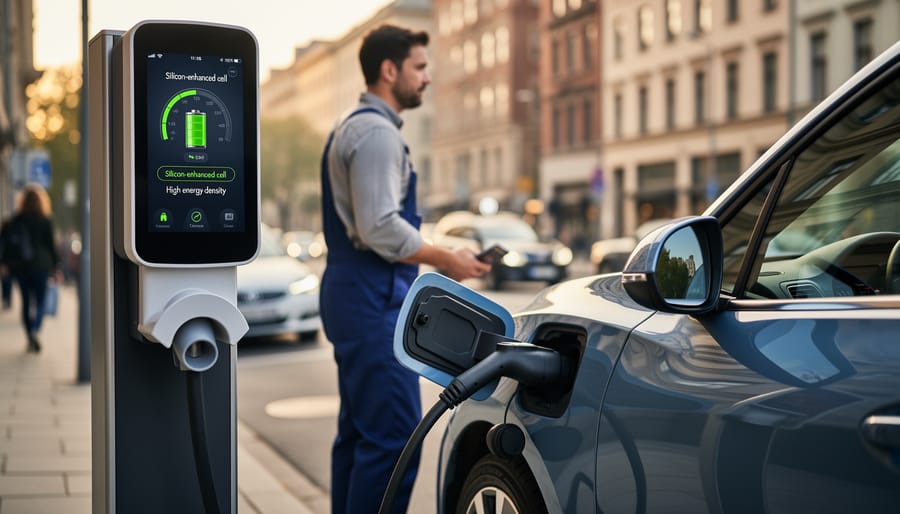
Silicon-enhanced cells earn their place where every gram and every cubic centimeter counts. That means premium smartphones and wearables, performance electric vehicles, drones, and any product where fast charging or compact size is a selling point. In these cases, extra energy density is worth a higher price per kilowatt-hour.
Conventional graphite still wins in other places. Stationary storage that must run for ten to twenty years, and projects judged mainly on lowest cost, rarely benefit from silicon’s extra capacity. Even low-power products such as solar powered devices and small solar devices usually run well on proven graphite cells, because durability and price matter more to them than squeezing out more capacity.
So how do you decide? Four criteria carry most of the weight: cycle life, cost per kilowatt-hour, supply-chain readiness, and certification. A product expected to last thousands of charge cycles needs evidence that the silicon blend holds up. A cell that is cheap per unit but unavailable in volume, or lacking safety certification for your market, is not a real option.
Before committing, ask these questions of any supplier or design team:
- How much energy density do we actually need, and is graphite already enough?
- What cycle life does the product require, and what test data backs the supplier’s claim?
- Does the use case depend on fast charging, and at what temperatures?
- Does the budget allow for a cost premium per kilowatt-hour?
- What is the supplier’s track record, and can they deliver consistent volumes?
- Which safety and transport certifications apply, and has the cell passed them?
Manufacturers and projects face a parallel question: can they qualify for public support? Many governments fund research, pilot plants, and domestic production of advanced battery materials through grants, tax credits, loans, or demonstration programs. Eligibility often depends on factors such as where the material is produced, the stage of development, and sustainability reporting. These rules differ by country and change frequently, so treat any figure or deadline you read secondhand with caution. Check current terms directly with the relevant energy, industry, or research agency before building a funding plan around them.
Rights and Obligations: Safety Standards, Sustainability Rules and Consumer Protections
Whether a battery contains silicon or pure graphite, the same core rules apply, and they fall on both producers and buyers. Manufacturers must show that cells pass recognized safety and transport tests before they ship. These typically cover short-circuit, overcharge, crush and thermal abuse scenarios, plus the UN transport testing framework for lithium batteries that governs air, sea and road shipping. Silicon anodes don’t change the obligation, but a cell that swells more during charging may need extra scrutiny of its mechanical and thermal behavior.
Labeling and warranties are where buyers feel the rules most directly. Products should carry clear markings for chemistry, capacity, voltage and safe handling, along with disposal instructions. Consumers can reasonably expect a written warranty that states its duration and any capacity-retention threshold, and range or lifespan claims that reflect standardized testing rather than best-case lab results. If a brand advertises “silicon anode” performance, ask what test conditions produced the numbers and how many charge cycles the warranty actually covers.
Sustainability rules are expanding fast, and this is where manufacturers face the heaviest documentation. In major markets, the direction of travel includes:
– Battery passports: digital records describing a battery’s composition, origin and performance history.
– Due diligence: checks that raw materials such as cobalt, nickel and lithium are sourced responsibly.
– Carbon footprint disclosure: reporting the emissions tied to making a cell, which matters for energy-intensive steps in the silicon chain.
– Recycling obligations: producer responsibility for collecting and recovering batteries at end of life.
Because these frameworks differ by jurisdiction and change often, avoid treating any single summary, including this one, as the final word on what applies to a particular product or market. The broader reason these rules exist is tied to climate goals; the growing body of evidence on climate impacts is part of why regulators want batteries made, tracked and recovered more responsibly.
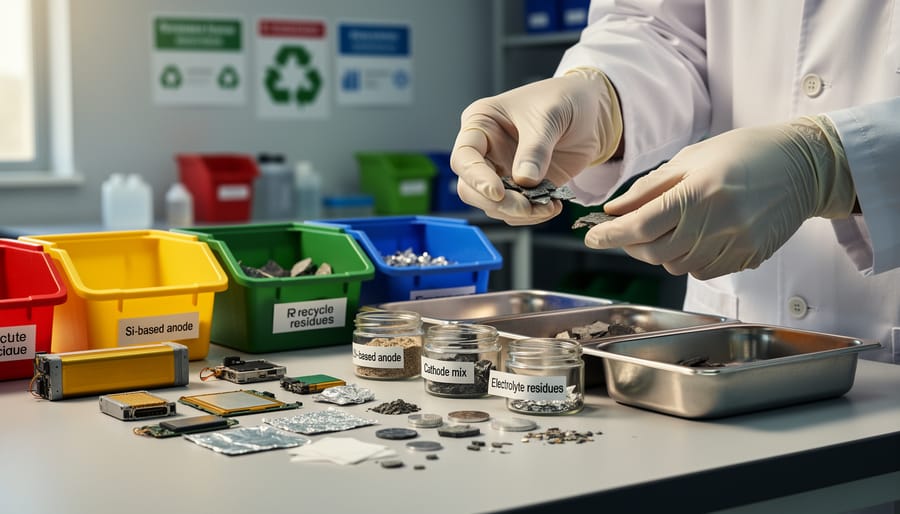
End of life deserves a plain note. Silicon-containing cells generally enter the same collection and recycling streams as conventional lithium-ion batteries, where valuable metals are the main recovery target. Silicon is present in comparatively small amounts and is not yet a major recovery priority, though researchers are studying ways to reclaim it and reuse it in new anode material. For now, the most practical step is to return used batteries through official collection channels rather than household waste.
Where to Get Help and Reliable Information
Good information on silicon lithium batteries is easier to find than you might expect, if you know which doors to knock on. Start with national energy and standards agencies, which publish technical roadmaps, test methods and safety guidance. Government battery research programs and national laboratories release open-access reports that translate lab results into plain findings. Industry standards bodies define how cells are tested and labeled, and local recycling authorities explain what happens to batteries at end of life.
Different readers need different starting points:
– Students: Search university repositories and national laboratory publication libraries for peer-reviewed work on silicon anodes, then follow the citations backward.
– Educators: Look for teaching kits and explainers from energy agencies and university outreach programs. If you are building a wider unit on clean energy, pair battery lessons with a primer on how solar works since storage and generation are two halves of one story.
– Policy-makers: Request technical briefings from energy departments, laboratory programs and standards committees rather than relying on press releases.
– Consumers: Check your product warranty first, then contact your national consumer protection office for disputes and your local recycling authority for disposal rules.
Rules and programs differ by country and change often, so confirm current details on official websites.
Are silicon batteries safe?
Cells containing silicon must pass the same recognized safety and transport tests as other lithium-ion batteries. Safety depends on the specific cell design and manufacturer, so look for certified products from reputable makers.
Do they last as long as graphite batteries?
Not always. Silicon’s swelling can shorten cycle life, which is why most commercial cells blend a modest amount of silicon with graphite. Ask suppliers for documented cycle-life data.
Can they be recycled?
Silicon-containing cells generally enter existing lithium-ion recycling streams, though recovering the silicon itself is still an active research area. Your local recycling authority can point you to approved collection options.
Are they available in products I can buy?
Some products already use silicon-enhanced anodes, especially in compact electronics. Check manufacturer specifications and current announcements to confirm what is on the market today.
Whichever source you use, favor evidence over enthusiasm: look for published data, named methods and clear limits on what a claim covers.
Silicon won’t single-handedly solve energy storage, but it’s a meaningful step in the right direction. By letting each cell hold more energy, silicon anodes can help electric vehicles go farther, make devices more compact, and ease some of the pressure on raw materials. Those gains matter for climate goals, because better batteries make renewable power easier to store and clean transportation easier to choose.
The real payoff, though, depends on three things: how well silicon cells hold up over thousands of cycles, whether their cost keeps falling, and how responsibly the material is sourced and processed.
So what can you do? Ask suppliers which anode chemistry they use and what cycle life they can document. Follow peer-reviewed research and national laboratory findings rather than marketing claims. And back companies that publish transparent sustainability reports, including carbon footprint and recycling plans.
Stay curious, keep asking good questions, and stay engaged. Progress in clean energy often arrives in steady, practical upgrades like this one.