How to Choose 9 Volt Solar Panels: A Buying Guide for Powering Small Devices
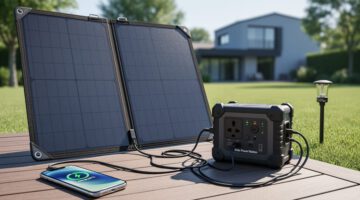
Nine-volt solar panels bridge a critical gap in sustainable energy: they deliver precisely the voltage needed to power smoke detectors, guitar pedals, small radios, Arduino projects, and dozens of other devices that have traditionally relied on disposable batteries. For anyone tired of replacing 9V batteries every few months or seeking energy independence for off-grid projects, these compact panels offer a practical solution that pays for itself within a year while reducing battery waste.
The challenge lies in matching panel specifications to your device’s power requirements. A 9V solar panel isn’t simply a miniaturized version of rooftop arrays. It must maintain stable voltage output across varying light conditions, deliver adequate current for your specific application, and often include charge regulation to prevent damage. Many buyers discover too late that their inexpensive panel can’t sustain consistent power or lacks weather resistance for outdoor use.
Understanding what separates effective 9V panels from underperforming options transforms solar device buying from guesswork into informed decision-making. Current market options range from bare photovoltaic cells requiring DIY wiring to complete kits with built-in charge controllers and mounting hardware. Prices span from under $30 for basic models to specialized systems exceeding $50, yet cost alone doesn’t predict real-world performance.
This guide cuts through marketing claims to reveal which panel types suit different applications, what specifications actually matter for reliability, and how to avoid the three most common purchasing mistakes that leave projects underpowered or equipment damaged. Whether you’re maintaining emergency backup systems, building educational STEM projects, or powering remote sensors, the right 9V solar solution transforms intermittent battery anxiety into continuous, sustainable operation.
Understanding 9 Volt Solar Panel Applications
Nine-volt solar panels occupy a practical sweet spot in the consumer solar market, compact enough for portable applications yet powerful enough to keep small devices running continuously. Unlike the USB panels you’d use to charge a smartphone or the larger 12V systems designed for car batteries and RV installations, 9V panels serve a distinct niche of low-power electronics that require steady, maintenance-free operation in remote locations.
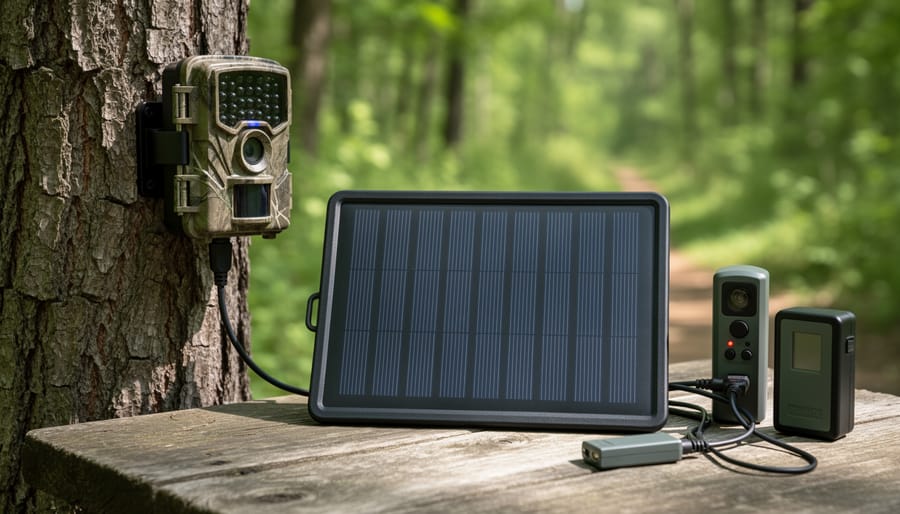
Trail cameras represent one of the most popular applications for 9V solar panels. Wildlife photographers and property monitors place these cameras in forests, fields, and backcountry locations where replacing batteries every few months becomes impractical. A 3-5 watt 9V panel paired with the camera’s internal battery keeps the device recording indefinitely, eliminating the need for monthly trips to swap out disposable batteries.
When you choose solar devices for DIY electronics, 9V panels prove especially versatile. Hobbyists building Arduino projects, amateur radio setups, or custom sensor networks find that 9V output matches the voltage requirements of many common electronic components without requiring complex voltage conversion circuits.
- Trail cameras and wildlife monitoring equipment in remote locations
- Small weather stations and environmental sensors requiring continuous outdoor operation
- Security devices like motion detectors and alarm systems for sheds or gates
- Educational STEM kits teaching students about renewable energy and circuit design
- Backup charging systems for 9V rechargeable batteries in emergency radios and tools
Remote sensors benefit particularly from solar charging, whether you’re monitoring soil moisture in a garden, tracking temperature in a greenhouse, or collecting data from distributed environmental sensors. These applications demand reliable power in locations where running electrical wiring proves costly or impossible.
Educational settings have embraced 9V panels as teaching tools. Students can build functioning solar-powered devices without the higher costs and safety concerns of larger systems, making renewable energy concepts tangible and accessible. The panels bridge the gap between toy-scale solar experiments and professional-grade installations, offering genuine utility at a manageable scale.
Key Factors to Consider When Choosing a 9V Solar Panel
Wattage and Power Output
Understanding wattage output is the foundation of selecting a solar panel that will actually work for your needs. Most 9V solar panels fall in the 3W to 10W range, with wattage directly determining how quickly you can charge a device or run a low-power gadget.
To match a panel to your application, start with your device’s power consumption. A trail camera drawing 200mA at 9V needs roughly 1.8 watts continuously, meaning a 5W panel provides comfortable headroom for charging its internal battery during daylight. A small radio requiring 500mA would need at least 4.5 watts, pushing you toward an 8W or 10W panel to ensure adequate power even in less-than-ideal conditions.
Here’s the critical point: rated wattage assumes perfect conditions, bright midday sun hitting the panel at the optimal angle. Real-world performance typically delivers 60-80% of rated capacity due to cloud cover, morning and evening sun angles, dust accumulation, and temperature effects. A 5W panel might realistically produce 3-4 watts during most of the day. When shopping, assume you’ll get about three-quarters of the advertised wattage on average, and size up if your device runs continuously rather than charging intermittently.
Compatibility and Connection Types
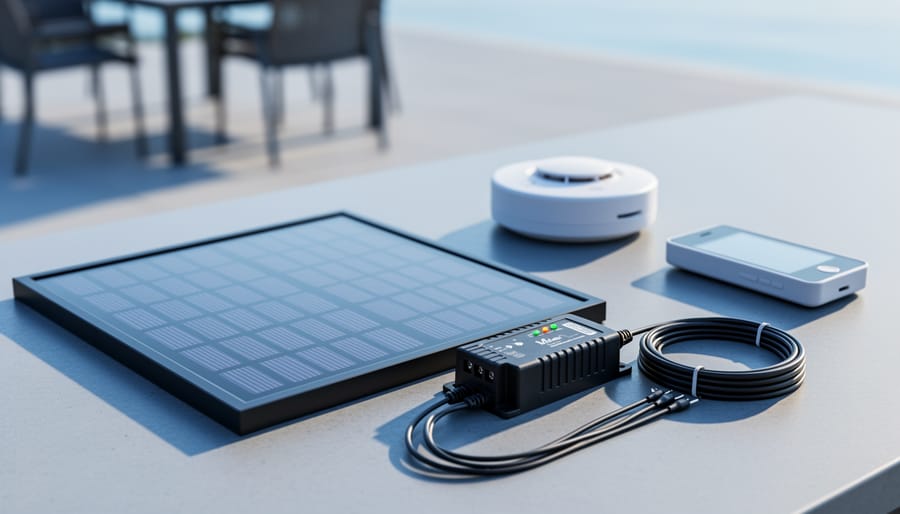
The most critical compatibility factor for 9V solar panels isn’t the voltage rating itself, it’s the regulation circuit between panel and device. A “9V” panel often outputs 10-12 volts in full sun, and many electronics designed for 9V batteries can’t tolerate that variance. Trail cameras, guitar pedals, and sensitive sensors typically need voltage regulation to prevent damage from overvoltage spikes or undervoltage brownouts when clouds pass overhead.
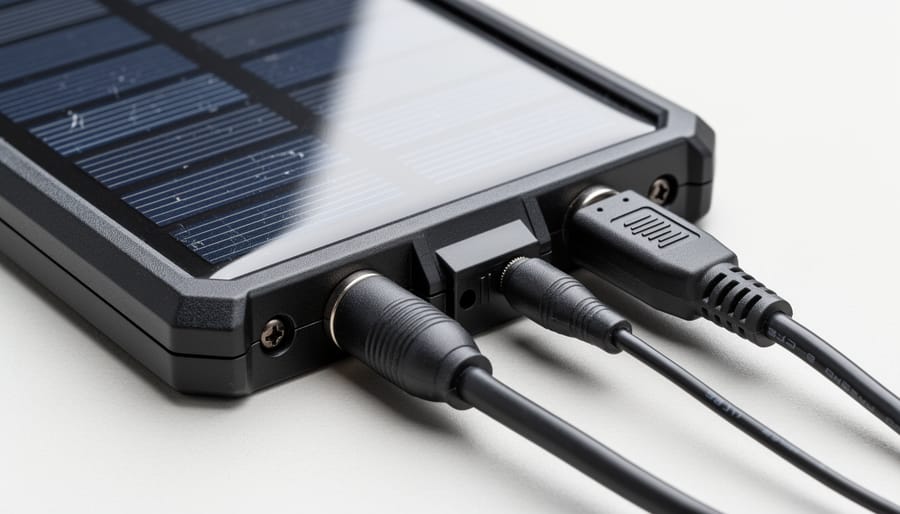
Connection types vary widely across small solar panels. USB-C outputs have become standard for smartphone-charging panels but deliver 5V, not 9V, manufacturers include step-up converters or expect users to charge a separate battery pack. Barrel plug connectors (typically 5.5mm×2.1mm) remain common for trail cameras and security devices, with polarity marked explicitly since reversed connections can fry circuits. Alligator clips suit battery charging applications where you’re connecting directly to terminals, though they require careful attention to positive and negative leads.
Multi-voltage panels with selectable output (5V/6V/9V/12V) use internal switching regulators, offering flexibility but adding cost and complexity. These work well for powering different devices with one panel, though the actual current capacity drops as voltage increases, a 10W panel might deliver 2A at 5V but only 0.8A at 12V. For dedicated 9V applications, a fixed-output panel with proper voltage regulation typically provides more reliable performance than a multi-voltage option running at capacity.
Adapters bridge compatibility gaps, USB-C to barrel plug converters appear in several current Ring camera solar kits, but each adapter introduces resistance and potential failure points. Direct-match connections between panel output and device input always perform better than daisy-chained adapters.
Weatherproofing and Durability
Field conditions demand solar panels that can withstand rain, dust, temperature swings, and prolonged sun exposure without degrading. IP ratings provide the most reliable indicator of protection: IP65 offers dust-tight sealing and resistance to water jets, making it suitable for most outdoor installations where direct submersion isn’t expected. IP67 and IP68 ratings, commonly seen on trail camera solar panels, guarantee waterproofing even during heavy downpours or temporary submersion, critical for remote wildlife monitoring or security applications where you can’t rush out to shelter the panel during storms.
Beyond water resistance, look for UV-stabilized materials and tempered glass or durable polymer surfaces that won’t yellow, crack, or lose efficiency after months of direct sunlight. Temperature tolerance matters more than many buyers realize: cheap panels may produce rated output at 25°C but suffer significant voltage drops in summer heat or fail to start charging in freezing conditions. Quality 9V panels specify operating ranges from -20°C to 60°C, ensuring year-round reliability whether mounted on a snowy trail post or a sun-baked roof.
Corrosion-resistant junction boxes and sealed connectors prevent moisture ingress at vulnerable connection points, the most common failure mode for outdoor solar equipment. If your panel will face extended outdoor exposure rather than occasional portable use, treating weatherproofing as a non-negotiable specification rather than an optional upgrade pays dividends in longevity and consistent performance.
Size, Weight, and Portability
Physical dimensions and weight matter more than most buyers initially realize, particularly when you’re mounting a panel in a fixed location or carrying it into remote areas. A typical 9V panel designed for trail cameras or small electronics ranges from pocket-sized (roughly 4×6 inches for a 3W unit) up to notebook-sized (around 7×10 inches for a 9W panel). These dimensions directly affect where you can mount the panel and whether it fits your intended installation spot, a narrow fence post requires a different form factor than the flat roof of a weather station enclosure.
Weight becomes critical for backpacking applications. Compact 9V panels generally weigh between 4 and 12 ounces, light enough to carry without significantly impacting your pack load. However, panels bundled with integrated batteries or charge controllers can add another 6-12 ounces, transforming a negligible addition into a noticeable one on multi-day trips.
The choice between fold-out and rigid designs involves trade-offs. Rigid panels offer durability and simpler mounting but take up fixed space in a pack or installation area. Fold-out designs collapse to half their deployed size, making them easier to transport, though the hinges and seams introduce potential failure points in harsh conditions. For permanent outdoor installations where the panel stays put year-round, rigid construction typically outlasts folding alternatives. For portable charging where you set up and break down frequently, the space savings of a fold-out design often justify the minor durability compromise.
Types of 9V Solar Panels and Battery Systems Compared
When shopping for a 9V solar panel solution, you’ll encounter four main configurations, each optimized for different scenarios. Understanding these categories helps you zero in on the right setup without overpaying for features you won’t use or discovering too late that your panel lacks a critical component.
Standalone 9V Panels
These are bare solar panels with basic connection cables, no frills, no built-in batteries or charge controllers. You get a photovoltaic module designed to output approximately 9 volts in direct sunlight, typically in the 3W to 10W range. Standalone panels work best when you’re powering devices that draw current only during daylight hours or when you already own a separate charge controller and battery bank. They’re the most compact and lightweight option, making them ideal for backpacking projects where every ounce counts. The trade-off? You assume responsibility for voltage regulation, and your device won’t function after sunset unless you add external battery storage.
Integrated Battery-Panel Combos
These units combine a solar panel with an internal rechargeable battery, often lithium-ion or LiFePO4, that stores energy during the day for nighttime use. Trail camera solar panels exemplify this category: the panel charges the battery throughout daylight hours, and the battery maintains a steady power supply to your camera 24/7. Integrated combos eliminate the hassle of matching components and typically include basic charge protection circuitry to prevent overcharging. They cost more upfront than standalone panels but deliver plug-and-play convenience for applications requiring continuous operation. Look for models with battery capacity ratings (measured in milliamp-hours) that match your device’s daily consumption; undersized batteries will drain before dawn during cloudy stretches.
Multi-Voltage Panels with Adjustable Output
Some manufacturers offer panels with selectable voltage outputs, commonly 5V, 6V, 9V, and 12V, switched via a dial or button. These versatile units suit users powering multiple device types or those uncertain about future needs. A hiker might charge a 5V phone during the day and a 9V radio beacon at night. The adjustability comes at the cost of slightly reduced efficiency at non-native voltages and a higher price point. Verify that the panel includes adequate voltage regulation at each setting; cheaper models may deliver unstable output that damages sensitive electronics.
Kit Systems with Charge Controllers
Complete kits bundle a 9V panel with a dedicated charge controller, either pulse-width modulation (PWM) or maximum power point tracking (MPPT), and sometimes mounting hardware and extension cables. The charge controller optimizes energy harvest, prevents battery overcharging, and blocks reverse current drain at night. While consumer solar panel kits often focus on 12V systems for automotive and marine applications (like the 20W models dominating current best-seller lists at $35-40), specialized 9V kits exist for remote sensor networks and educational STEM projects. MPPT controllers cost more but extract 20-30% more power from the panel than PWM equivalents, especially valuable in partial shade or cold conditions. Choose a kit system when reliability matters more than portability, permanent installations on cabins, sheds, or research equipment enclosures.
| Panel Type | Typical Wattage | Best Use Case | Portability |
|---|---|---|---|
| Standalone Panel | 3W-10W | Daytime-only devices, custom DIY builds | High |
| Battery-Panel Combo | 5W-9W | Trail cameras, continuous sensors | Medium |
| Multi-Voltage Panel | 5W-12W | Users with varied device voltages | Medium-High |
| Kit with Controller | 10W-20W | Fixed installations, battery charging | Low |
Your choice hinges on whether you prioritize simplicity, flexibility, or maximum energy capture. A weekend camper powering a single GPS unit benefits from a lightweight standalone panel. A wildlife researcher running cameras year-round in remote locations needs the reliability of an integrated combo or a controller-equipped kit. Match the configuration to your longest deployment duration and harshest expected conditions, it’s better to overengineer slightly than to hike back out for a panel upgrade.
What to Look for in Accessories and Features
The accessories bundled with a 9V solar panel can mean the difference between a frustrating experiment and a plug-and-play power solution. Understanding which components matter most helps you avoid buying twice or damaging your devices through incompatible connections.
Charge Controllers: Essential vs. Optional
A charge controller regulates the voltage and current flowing from your panel to your battery or device, preventing overcharging and voltage spikes. For 9V panels powering sensitive electronics directly, a built-in charge controller is crucial, without one, voltage fluctuations in bright sunlight can fry circuit boards. The two main types serve different purposes: PWM (Pulse Width Modulation) controllers work adequately for small 9V systems and cost less, while MPPT (Maximum Power Point Tracking) controllers extract 10-20% more power from the panel by constantly adjusting to optimal voltage. For panels under 10W powering simple devices, PWM suffices. Save MPPT for larger setups or situations where you need every watt.
Connection Cables and Adapters
Cable length matters more than most buyers realize. A 3-foot cable forces you to position your panel near the device, which rarely aligns with optimal sun exposure. Look for 10-13 feet minimum for outdoor installations like trail cameras. The connector type determines compatibility: barrel plugs (2.1mm and 2.5mm variants), alligator clips for battery terminals, USB-C for modern devices, and Anderson Powerpole connectors for reliable weatherproof connections. Panels that include multiple adapter types save you from hunting down compatible cables later.
Mounting Hardware and Physical Stability
Adjustable mounting brackets let you angle the panel toward the sun throughout the day, capturing significantly more energy than a fixed position. Metal brackets outlast plastic in outdoor conditions, and pre-drilled holes simplify permanent installations. For portable use, integrated kickstands or fold-out designs beat carrying separate hardware.
Built-in Battery Storage
Panels with integrated batteries store excess power for cloudy days or nighttime use, particularly valuable for security cameras and sensors that run 24/7. A 2000-3000mAh battery provides several hours of backup power for low-draw devices. The trade-off: added weight and higher cost.
Multiple Output Ports
Dual USB and DC outputs let one panel power multiple devices simultaneously, though total wattage splits between ports. This flexibility matters for camping setups or powering both a camera and a sensor from a single panel.
Current Market Options: What’s Available for 2026
The consumer solar panel market in 2026 shows a clear divide between mainstream products and specialized low-voltage options. Amazon’s best-seller rankings reveal that 12V automotive and security camera panels dominate consumer purchases, with the top sellers consistently landing in the $28-40 range. The SOLPERK Solar Panel Kit (20W, 12V) holds the #2 position at $34.99, while the Voltset 20W 12V model sits at #3 for $39.99. Security camera accessories, particularly Ring-compatible solar chargers, claim both the #1 and #4 spots at $36.99 and $28.49 respectively, demonstrating strong demand for powering outdoor surveillance equipment.
True 9V solar panels occupy a narrower niche within this landscape. While major retailers prioritize higher-wattage 12V systems for cars, RVs, and security cameras, specialized 9V options serve trail camera users, electronics hobbyists, and remote sensor applications. These products typically feature compact, weatherproof designs in the 3W, 9W output range. Trail camera solar panels with integrated rechargeable batteries represent the most common 9V application, offering continuous low-level charging for motion-activated devices in remote locations.
The current market shows these characteristics for small-format panels:
- Wattage ranges from 3W compact models to 20W multi-purpose chargers
- Pricing spans $25-45 for consumer-grade waterproof units with mounting hardware
- Security camera compatibility drives mainstream sales, with USB-C and barrel plug adapters standard
- IP65, IP68 weatherproofing ratings are now baseline expectations rather than premium features
- Bundle packages including charge controllers and adjustable mounts dominate best-seller lists
For buyers seeking 9V-specific output, availability tightens considerably. Most popular “9V” searches return 12V panels with voltage adapters or multi-voltage outputs adjustable through included controllers. This reflects the industry’s consolidation around 12V as the standard for small solar charging, pushing dedicated 9V panels into specialty supplier catalogs rather than mainstream retail channels.
Common Mistakes to Avoid When Buying
Buying a 9V solar panel seems straightforward until you discover your trail camera won’t hold a charge or your electronics project fries because the voltage spikes. These common mistakes trip up even experienced buyers.
Overestimating charging performance in real-world conditions. Manufacturers rate panels under laboratory conditions, full, direct sunlight hitting the panel at a perfect angle. In practice, you’ll encounter cloud cover, shade, dawn and dusk hours, and winter sun positioned low on the horizon. A 5W panel might deliver only 2-3W during much of the day. If your device draws 500mA continuously, an undersized panel will drain your battery faster than it replenishes it. Calculate your actual power needs, then add 30-50% capacity as a buffer for less-than-ideal conditions.
Ignoring voltage regulation requirements. Many buyers assume a 9V panel can directly power any 9V device. Wrong. Solar panels produce variable voltage depending on sunlight intensity, sometimes exceeding rated output by 20-30%. Sensitive electronics like microcontrollers, GPS units, and audio equipment require stable voltage. Without a charge controller or voltage regulator, you risk damaging components. Even charging batteries demands regulation; overcharging lithium cells creates fire hazards, while improperly charged lead-acid batteries sulfate and lose capacity.
Buying panels without adequate weatherproofing for the application. An IP65-rated panel might survive light rain, but extended outdoor exposure to morning dew, snow, and temperature swings will corrode connections and degrade performance within months. If you’re mounting a panel on a deer cam or remote sensor, invest in IP67 or IP68 protection. Check junction boxes and cable entry points, these fail before the panel itself.
Underestimating cable length and connection compatibility. That perfect panel becomes useless when the 3-foot attached cable won’t reach your device’s mounting location. Extension cables introduce voltage drop (especially problematic at low voltages like 9V) and create additional failure points in outdoor installations. Verify connector types before purchasing, barrel plugs come in multiple sizes, and not all USB adapters regulate voltage properly.
Recommendations: Matching Panel to Purpose
Start by understanding your device’s power consumption to match power needs with panel output. A 3W panel might keep a low-power sensor ticking over, but a trail camera pulling 500mA during daylight triggers will drain faster than it charges without at least 5-7W of capacity.
For trail cameras and security devices, prioritize panels with integrated battery packs that store daytime solar harvest for nighttime operation. Look for IP67 or higher waterproof ratings and mounting flexibility, you’ll need secure positioning that captures maximum sun exposure without creating theft opportunities. Cable length matters here; a 10-foot lead gives you positioning options when the optimal sun angle doesn’t align with your camera mount.
Portable charging applications demand fold-out or lightweight rigid panels under 1.5 pounds. Choose models with multiple output options (USB-C, barrel plugs, alligator clips) to accommodate different devices on the go. A built-in voltage regulator prevents frying sensitive electronics when sunlight intensity fluctuates.
Fixed installations for remote sensors or small battery maintenance systems benefit from rigid panels with sturdy mounting brackets. These setups can sacrifice portability for larger surface area and higher wattage, consider a 10W panel if you’re charging a 9V battery bank that will power equipment overnight.
Educational projects and STEM kits work best with budget-conscious panels in the 3-5W range. Prioritize clear voltage specifications and included connectors over advanced features. These panels teach solar principles without requiring significant investment, and lower power output creates a safer learning environment for hands-on experimentation.
In all cases, verify the panel’s actual output voltage under load matches your target 9V, not just its open-circuit rating. A charge controller adds cost but prevents overcharging damage, especially critical when you’re leaving systems unattended for extended periods.
Frequently Asked Questions
Understanding the practical questions around 9V solar panels helps you make better purchasing decisions and avoid common frustrations. These queries come up repeatedly among first-time buyers and DIY enthusiasts exploring why solar matters for powering small devices sustainably.
Can I use a 9V panel to charge a 12V battery?
No, a 9V panel cannot effectively charge a 12V battery because it lacks sufficient voltage to overcome the battery’s internal resistance and push current into it. You need at least 13-14V for proper 12V battery charging, which is why 12V solar panels actually output around 18V.
How much sunlight do I need for effective charging?
You need direct, unobstructed sunlight for peak performance, typically 4-6 hours of strong sun daily for meaningful charging. Cloudy conditions or shade can reduce output by 50-90%, so position your panel where it receives the most direct exposure during midday hours.
Are fold-out panels better than rigid ones?
Fold-out panels offer portability and easier storage for mobile applications like backpacking, while rigid panels provide better durability and weather resistance for fixed installations. Choose based on whether you prioritize transport convenience or long-term outdoor exposure.
What’s the difference between a solar panel with and without a charge controller?
A charge controller regulates voltage and current to prevent overcharging or voltage spikes that can damage sensitive electronics. Panels without controllers work fine for simple applications but risk damaging devices that require stable power, making controllers essential for battery charging or valuable equipment.
Do waterproof ratings really matter?
Yes, if your panel will face outdoor conditions. An IP65 or higher rating protects against rain and dust, while lower ratings may fail within months when exposed to moisture, leading to corroded connections and reduced output.
Can I connect multiple 9V panels together for more power?
You can wire panels in parallel to increase current output while maintaining 9V, but this requires matching panel specifications and proper connections to avoid voltage mismatches. Series wiring increases voltage but moves beyond the 9V range most small devices need.
These answers reflect real-world performance rather than idealized specifications. Temperature extremes affect output, panels lose efficiency in high heat and may underperform in cold conditions even with bright sun. Cable length matters too, since voltage drops over distance, so keeping runs short preserves power delivery to your device.
When evaluating compatibility, check whether your device needs regulated 9V or can tolerate the panel’s actual output, which fluctuates with sunlight intensity. Many electronics include internal regulators, but sensitive equipment may require an external voltage regulator between panel and device. Understanding these practical constraints helps you match panel capabilities to your specific application needs.
Choosing the right 9 volt solar panel comes down to matching specifications to your device’s needs. Don’t rush the decision, voltage compatibility and weatherproofing determine whether your panel powers a trail camera reliably through a rainy season or leaves you replacing batteries mid-deployment. Take time to verify wattage output against your device’s consumption, confirm connection types before ordering, and choose IP ratings that match your installation environment.
Small solar panels like these represent more than a convenience purchase. They’re part of a broader renewable adoption movement reshaping consumer products. Every trail camera, remote sensor, or electronics project powered by sunlight instead of disposable batteries reduces waste and demonstrates how renewable energy scales down to everyday applications. That shift starts with informed buyers who understand what they’re purchasing and why it matters.
Prioritize panels with built-in charge controllers for sensitive electronics, verify cable lengths for your mounting locations, and keep realistic expectations about cloudy-day performance. The right 9V solar panel turns a recurring battery expense into a one-time investment in sustainable power.