How Global Warming Reshaped Our World in 2020 — And What It Means for 2026
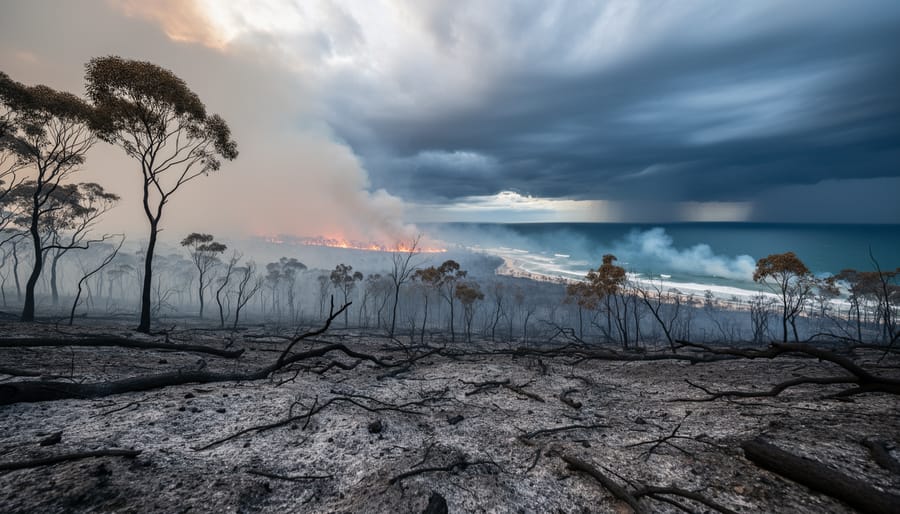
The year 2020 marked a devastating turning point in our climate story. While the world grappled with a global pandemic, our planet simultaneously wrestled with record-breaking wildfires that consumed over 10 million hectares in Australia alone, unprecedented Arctic temperatures that soared to 38°C in Siberia, and the most active Atlantic hurricane season ever recorded with 30 named storms. These weren’t isolated incidents. They were symptoms of a systemic crisis that has only intensified in the six years since.
Understanding what transpired in 2020 matters because it revealed patterns we’re still confronting today. That year demonstrated how global warming doesn’t just raise temperatures incrementally. It triggers cascading failures across ecosystems, economies, and communities simultaneously. The Australian bushfires released an estimated 715 million tons of carbon dioxide, equivalent to the annual emissions of 116 coal power plants, while displacing nearly three billion animals and destroying thousands of homes.
What makes 2020 particularly instructive is how it shattered the illusion that climate impacts remain distant or theoretical. From Death Valley recording the hottest temperature reliably measured on Earth at 54.4°C to the Arctic experiencing its second-lowest sea ice extent on record, the data painted an undeniable picture. Every inhabited continent experienced significant climate-related disasters, proving that geography offers no sanctuary from global warming’s reach.
This retrospective analysis examines 2020’s climate events not as historical footnotes, but as a blueprint for understanding our present crisis and charting pathways toward meaningful action.
2020: A Turning Point in Climate Awareness
The year 2020 wasn’t just another entry in the climate record books. It was the moment when abstract warnings crystallized into undeniable reality for millions worldwide. While scientists had documented global warming’s progression for decades, 2020 forced the crisis into public consciousness with a relentless cascade of climate disasters that transcended geographic, political, and social boundaries.
What made 2020 different was the convergence. Australia began the year engulfed in flames that incinerated an area larger than South Korea. By summer, California was choking under orange skies as megafires consumed millions of acres. The Atlantic unleashed 30 named storms, exhausting the alphabet for only the second time in history. Meanwhile, temperatures in Siberia soared to 100°F, fueling Arctic wildfires and accelerating permafrost melt. These weren’t isolated incidents. They represented a global pattern of climate destabilization occurring simultaneously across continents.
The pandemic paradox added another dimension to 2020’s climate narrative. Global lockdowns temporarily reduced emissions, offering a brief glimpse of clearer skies and quieter cities. Yet temperatures kept climbing, driving home an uncomfortable truth: the momentum of warming already in the system meant that even dramatic short-term emissions cuts couldn’t halt impacts already underway. This realization shifted conversations from whether climate change was happening to how quickly we could adapt and mitigate.
Scientific institutions crystallized their messaging in 2020. The Intergovernmental Panel on Climate Change reinforced that exceeding 1.5°C of warming would trigger cascading tipping points. Major financial institutions began factoring climate risk into investment decisions. Youth climate movements, amplified by social media, transformed from fringe activism to mainstream pressure campaigns. The confluence of visible disasters, scientific certainty, and growing public demand created conditions for a fundamental shift in how societies approached the climate crisis.
Extreme Weather Events That Defined 2020
Unprecedented Wildfires Across Continents
The 2020 fire season scorched approximately 46 million acres globally, an area larger than the entire state of Washington. Australia’s bushfire crisis began in September 2019 but reached its catastrophic peak in early 2020, consuming 46 million acres and killing an estimated three billion animals. Temperatures in southeastern Australia had climbed 1.4°C above the 1961-1990 average, while rainfall deficits stretched across multiple years. This combination transformed forests into tinderboxes where even lightning strikes ignited infernos that moved faster than firefighters could contain them.
California experienced its worst fire season on record, with over 4.2 million acres burned, more than doubling the previous record. Five of the state’s six largest fires in history occurred in 2020. The August Complex fire alone charred over one million acres, fueled by unprecedented heat waves that pushed temperatures above 120°F in some regions. Decades of warming had dried vegetation to critical moisture levels, creating fuel loads primed for combustion.
Above the Arctic Circle, Siberian fires released more carbon dioxide than Switzerland emits annually. Arctic temperatures in 2020 averaged 3°C above the long-term mean, thawing permafrost and igniting peat fires that smoldered underground through winter. These blazes weren’t just forest fires, they were warning signals from Earth’s most vulnerable regions, demonstrating how warming temperatures amplify fire risk across every latitude.
Atlantic Hurricane Season and Tropical Storm Intensity
The 2020 Atlantic hurricane season shattered records and exhausted the alphabet. With 2020 had 30 named storms forecasters ran out of traditional names by mid-September and switched to the Greek alphabet for only the second time in history. Twelve storms strengthened into hurricanes, and six reached major hurricane status.
Ocean temperatures tell the story behind this surge. The Atlantic basin experienced above-average sea surface temperatures throughout the season, providing the thermal energy that fuels tropical cyclones. Warmer water doesn’t just increase the number of storms, it accelerates their intensification. Hurricane Laura jumped from Category 1 to Category 4 in roughly 24 hours before slamming Louisiana with 150 mph winds. Hurricane Eta underwent similar rapid intensification, devastating Central America twice within weeks.
These aren’t isolated anomalies. The pattern connects directly to rising ocean heat content driven by global warming. As the planet warms, the ocean absorbs roughly 90% of the excess heat, creating increasingly favorable conditions for storm development and expansion of the zone where hurricanes can form and maintain strength.
Global Flooding and Precipitation Extremes
The monsoon season of 2020 brought catastrophic flooding to South Asia, displacing over 13 million people across India, Bangladesh, and Nepal. The Brahmaputra and Ganges rivers swelled beyond historical levels as intensified rainfall patterns dumped months’ worth of precipitation in days. This wasn’t isolated to Asia. East Africa experienced devastating floods from March through May, with Kenya, Somalia, and Ethiopia facing simultaneous crises that destroyed crops and contaminated water supplies.
In Europe, France and Italy confronted severe flooding in October when the remnants of Hurricane Alex stalled over the Maritime Alps, producing rainfall intensities not recorded in the region’s meteorological history. China’s Yangtze River basin saw its worst flooding in decades, affecting 55 million people and causing direct economic losses exceeding $15 billion.
These events shared a common driver: a warmer atmosphere holds approximately 7% more moisture per degree Celsius of temperature rise. This fundamental physics translates into more intense precipitation events when conditions trigger rainfall. The patterns we observed in 2020 represented not freak occurrences but predictable consequences of atmospheric warming, a shift toward extremes where wet regions experience more concentrated deluges while dry areas face intensified drought.
Ecosystems Under Siege: Biodiversity in 2020
The year 2020 delivered a stark reminder that global warming doesn’t just alter temperatures, it unravels the intricate web of life that sustains our planet. From tropical reefs to polar ice, ecosystems faced compounding pressures that pushed many to breaking points, revealing vulnerabilities scientists had warned about for decades.
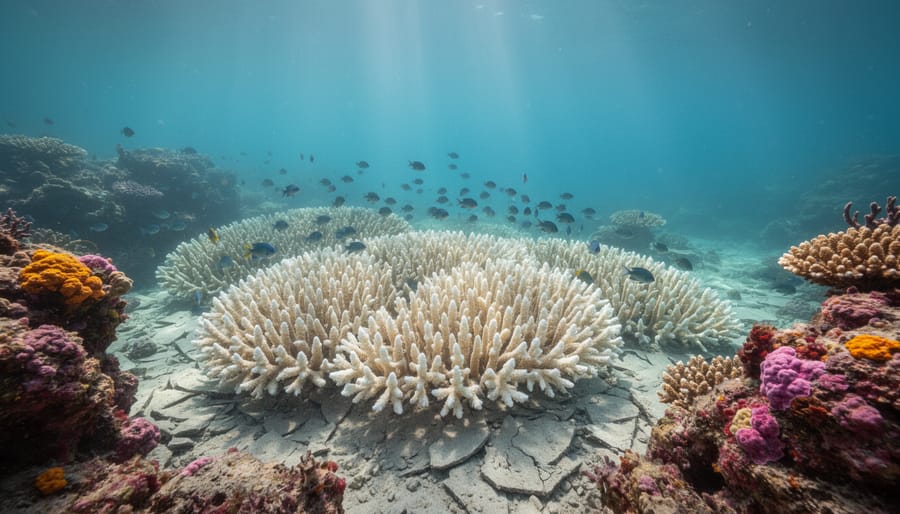
The Great Barrier Reef experienced its third mass bleaching event in five years during March 2020, the most widespread on record at that time. When ocean temperatures climb just 1-2°C above normal for sustained periods, coral polyps expel the symbiotic algae they depend on for nutrition and color. The reef’s northern and central sections showed severe bleaching across 25% of individual reefs surveyed. What makes this particularly alarming is the compressed recovery window, historical bleaching events occurred roughly a decade apart, allowing partial ecosystem regeneration. The new pattern of repeated bleaching every few years means corals can’t rebuild their structural complexity or replenish fish populations that depend on reef habitat.
Arctic sea ice reached its second-lowest minimum extent in September 2020, measuring just 3.74 million square kilometers, nearly half of what satellite records showed in the 1980s. This loss cascades through the entire polar food web. Ice algae, which grow on the underside of sea ice, form the foundation for zooplankton that feed juvenile Arctic cod, which in turn sustain seals, beluga whales, and polar bears. Less ice means less habitat for ice-dependent seals to birth and nurse pups, forcing polar bears to spend more energy hunting across fragmented ice or scavenging on land where food sources prove inadequate for maintaining body condition needed for reproduction.
Warming also disrupted migration timing that species refined over millennia. Many North American bird species arrived at breeding grounds in spring 2020 to find that peak insect abundance, critical protein for feeding nestlings, had already passed. Trees leafed out earlier due to warmer temperatures, triggering insect emergence before migratory birds completed their journeys. This phenological mismatch reduced reproductive success across multiple species, from warblers to flycatchers.
In the Amazon, deforestation combined with drought and heat created feedback loops. Parts of the rainforest transitioned from carbon sink to carbon source as trees died faster than new growth could absorb CO2. Researchers documented areas where moisture recycling, the process by which transpired water generates local rainfall, had degraded to the point where tropical forest showed signs of converting toward savanna.
These ecosystem disruptions matter beyond biodiversity loss. Coral reefs protect coastlines and support fisheries feeding hundreds of millions. Arctic ice regulates global climate patterns. Healthy forests stabilize rainfall and store carbon. When these systems falter, human communities face consequences we’re still measuring in 2026.
Human Consequences: Health, Migration, and Food Security
The abstract mechanics of rising temperatures and shifting weather patterns became grimly concrete in 2020 as communities worldwide confronted the direct human toll of global warming. What climate scientists had projected materialized in hospital wards, displacement camps, and empty grain silos.
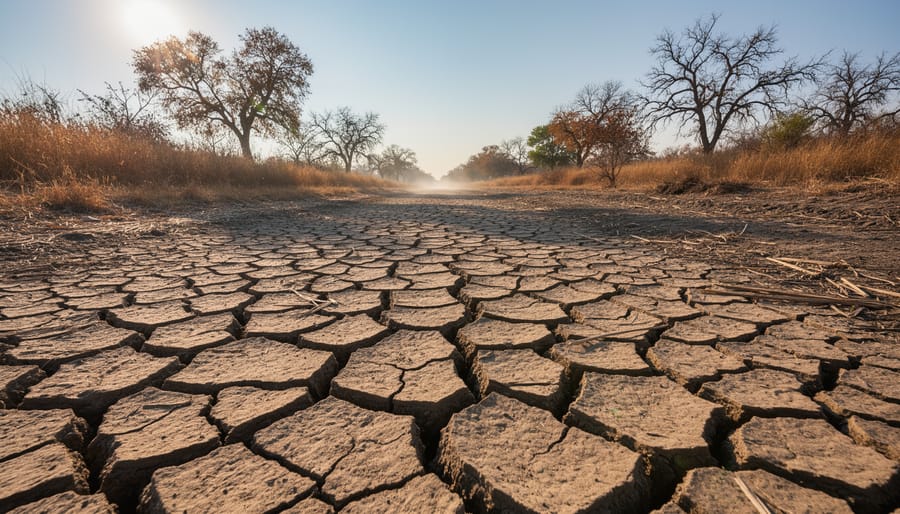
Heat stress emerged as a silent killer across multiple continents. India experienced temperatures exceeding 50°C (122°F) in May, creating conditions that made outdoor labor, and even basic survival, perilous. The elderly and outdoor workers faced the greatest risk, with heat-related deaths spiking in regions lacking adequate cooling infrastructure. Southern Europe recorded excess mortality during summer heatwaves, while parts of the Middle East saw wet-bulb temperatures approach the threshold of human survivability, signaling a troubling preview of conditions we’re seeing intensify in 2026.
Agricultural systems buckled under the dual pressures of extreme heat and erratic rainfall. East Africa’s locust plague, exacerbated by unusual rainfall patterns, devastated crops across Kenya, Ethiopia, and Somalia, threatening food security for millions. Southeast Asian rice paddies suffered from both drought and unseasonal flooding, disrupting harvests that feed nearly half the global population. North American grain producers faced their own challenges as the Midwest experienced flash droughts that shriveled corn and soybean yields, sending commodity prices upward and straining food assistance programs.
The scale of climate-driven displacement in 2020 revealed how environmental stress translates into human migration. Cyclone Amphan displaced over three million people across Bangladesh and India, while prolonged drought in Central America’s Dry Corridor pushed thousands northward. These weren’t isolated disasters but symptoms of habitability crises that made familiar landscapes suddenly uninhabitable.
| Region | Primary Climate Impact | Human Consequence | Population Affected |
|---|---|---|---|
| South Asia | Extreme heat, cyclones | Displacement, heat mortality | ~4 million displaced |
| East Africa | Locust plague, drought | Food insecurity, malnutrition | ~25 million facing hunger |
| Central America | Prolonged drought | Crop failure, migration | ~3.5 million food insecure |
| Southeast Asia | Flooding, typhoons | Displacement, infrastructure loss | ~10 million affected |
Food system vulnerabilities extended beyond immediate crop losses. Supply chain disruptions, compounded by the pandemic, exposed how climate shocks ripple through global trade networks. When droughts reduced yields in major exporting nations, importing countries faced both scarcity and price volatility. Subsistence farmers, already operating on thin margins, found themselves unable to plant or harvest on traditional schedules, undermining the food sovereignty of entire communities.
These human consequences of 2020 weren’t distributed equally. Low-income communities, both within wealthy nations and across the Global South, bore disproportionate burdens. They lacked the resources to relocate, the infrastructure to adapt, or the safety nets to absorb climate shocks. Six years later, we recognize that the vulnerability patterns visible in 2020 persist, demanding interventions that address both climate mitigation and social equity simultaneously.
Economic Disruption and the True Cost of Inaction
The economic devastation of 2020 laid bare a truth that many policymakers had long tried to ignore: the cost of addressing climate change pales in comparison to the cost of inaction. That year, global warming extracted an estimated $210 billion from the world economy through weather-related disasters alone, marking one of the costliest years on record for climate impacts.
The wildfire disasters in Australia and California demonstrated how quickly climate-driven catastrophes can drain public coffers. Australia’s bushfire season cost the economy roughly $103 billion when accounting for property destruction, agricultural losses, tourism decline, and health expenditures from smoke-related illnesses. California’s fire season required over $12 billion in suppression costs and damage recovery, straining state resources already stretched by pandemic response.
Agricultural systems absorbed brutal financial hits as temperature extremes and altered precipitation patterns disrupted production cycles. The U.S. Midwest experienced a derecho, a rare inland windstorm intensified by atmospheric instability, that flattened 14 million acres of crops, causing $11 billion in agricultural losses in a single August day. Drought conditions across East Africa devastated harvests, pushing 25 million people toward food insecurity while regional economies hemorrhaged income from failed crops and livestock deaths.
The insurance industry confronted an uncomfortable reckoning. Property insurers paid out record claims while simultaneously recognizing that traditional risk models no longer held in a rapidly warming world. Several major insurers withdrew coverage from high-risk coastal and wildfire-prone areas, leaving homeowners and businesses exposed. Munich Re, one of the world’s largest reinsurers, reported that 2020’s natural catastrophe losses totaled $210 billion globally, with only 42 percent insured, leaving massive uncompensated losses to communities least able to absorb them.
Infrastructure damage revealed the hidden costs embedded in decades of planning that ignored climate realities. Coastal flooding in Southeast Asia caused billions in damage to roads, bridges, and port facilities. European cities faced staggering repair bills after flash floods overwhelmed drainage systems designed for climate patterns that no longer existed.
These weren’t abstract economic statistics but real constraints on governments’ ability to fund schools, healthcare, and social services. Every dollar diverted to disaster recovery represented an opportunity cost, investment that could have strengthened renewable energy infrastructure, improved resilience, or supported the very communities most vulnerable to future impacts.
What We’ve Learned Since 2020: Progress and Setbacks
Six years ago, 2020 confronted us with undeniable climate realities. The question now is whether we truly heard the alarm. Looking back from our vantage point in 2026, the answer is both encouraging and sobering.
On the progress side, renewable energy deployment has exceeded even optimistic projections. Solar and wind capacity nearly doubled globally between 2020 and 2026, with costs continuing their downward trajectory. In the first quarter of this year alone, clean energy sources accounted for 40 percent of global electricity generation, a figure that seemed aspirational just six years ago. Electric vehicle adoption has similarly accelerated beyond forecasts, with EVs now representing over 20 percent of new car sales worldwide.
Policy frameworks have also evolved. More than 140 countries have strengthened their nationally determined contributions under the Paris Agreement since 2020. The European Union’s Carbon Border Adjustment Mechanism, implemented in 2024, created real economic incentives for emissions reductions. Corporate commitments to net-zero targets multiplied, though scrutiny of greenwashing has intensified alongside these pledges.
Yet these wins sit uncomfortably against the backdrop of continued emissions growth. Global carbon dioxide emissions in 2026 remain stubbornly above 2020 levels despite the pandemic-induced dip that year. We are still not bending the curve fast enough. The 1.5-degree warming threshold that seemed like a line to defend in 2020 now appears nearly certain to be crossed within the next decade.
Fossil fuel expansion has persisted despite renewable momentum. New oil and gas projects approved between 2020 and 2026 lock in decades of future emissions. Coal phase-out timelines in major economies keep slipping rightward. The gap between climate rhetoric and fossil fuel reality remains vast.
Perhaps most concerning, adaptation efforts lag dangerously behind the pace of change. Communities facing the climate impacts we saw intensify in 2020 still lack adequate resources for resilience-building. Climate finance flows to vulnerable nations have increased but fall dramatically short of actual needs.
The 2020 wake-up call did trigger meaningful action, but not transformation. We have proven we can scale solutions rapidly when we choose to. The question is whether we will choose to with sufficient urgency before the window for manageable adaptation closes entirely.
Actionable Pathways Forward
The climate signals of 2020 weren’t just warnings, they were blueprints for action. Six years later, we stand at a critical juncture where understanding past impacts must translate into immediate, measurable responses. Here’s how we move forward.
**Individual Action That Compounds**
Your daily choices create ripples that become waves. Start with these high-impact steps:
- Transition to renewable energy sources for your home through solar installation or green energy programs, costs have dropped 60% since 2020, making this more accessible than ever.
- Shift transportation habits by choosing electric vehicles, public transit, or active commuting for trips under three miles, which account for 40% of household emissions.
- Adopt a plant-forward diet, reducing meat consumption by even 50% cuts your food-related carbon footprint significantly while improving health outcomes.
- Advocate vocally by contacting elected officials monthly about climate legislation, because consistent constituent pressure demonstrably influences policy decisions.
- Redirect finances toward sustainable investments and divest from fossil fuel holdings, leveraging the $5 trillion that has already shifted to climate-conscious portfolios since 2020.
These aren’t isolated gestures. When 10% of a community adopts new behaviors, research shows tipping points emerge that normalize those choices across entire populations.
**Community-Scale Transformation**
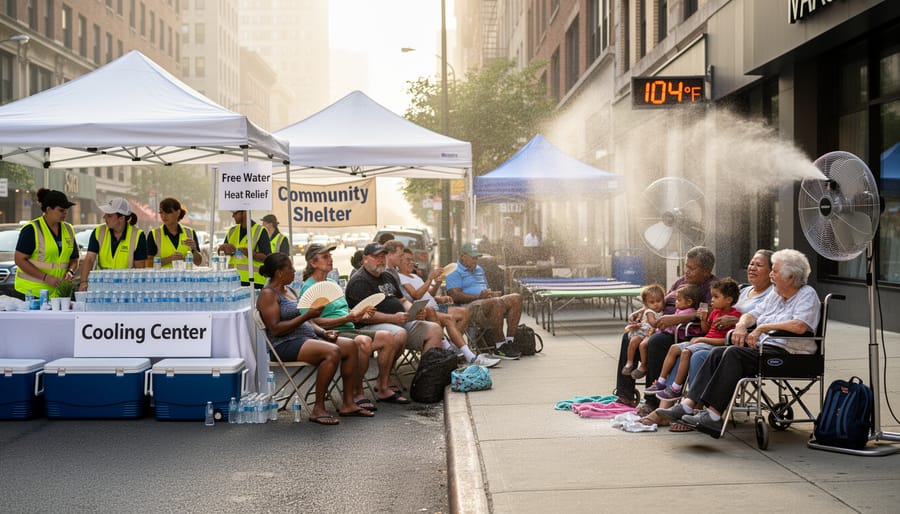
Cities and towns hold remarkable power. Urban areas generate 70% of global emissions but also control infrastructure decisions. Communities should prioritize heat-resilient planning through expanded tree canopy coverage, which reduces urban temperatures by up to 9°F, and implement rainwater management systems that prevent flooding while recharging aquifers. Local renewable energy cooperatives let residents pool resources for solar or wind installations that individual households couldn’t afford alone.
**Policy Imperatives for 2026**
Policymakers must mandate emissions reductions with teeth: binding targets, carbon pricing that reflects true environmental costs, and elimination of fossil fuel subsidies that still total $600 billion globally. The window for preventing the worst scenarios hasn’t closed, but it’s narrowing rapidly. Every fraction of a degree matters, and every policy choice either opens or forecloses future possibilities.
Looking back from 2026, the climate events of 2020 stand as more than historical footnotes, they were warning sirens that many of us chose to ignore. The wildfires, hurricanes, floods, and ecosystem collapses weren’t anomalies. They were previews of our accelerating reality.
Six years later, we’ve watched those patterns intensify. The atmospheric physics haven’t changed: warmer air holds more moisture, warmer oceans fuel stronger storms, and rising temperatures push ecosystems past their breaking points. What has changed is our window for action, which narrows with each passing season.
Yet here’s the truth that matters most: we’re not powerless spectators. Every renewable energy installation, every policy shift toward carbon reduction, every community that builds climate resilience, these represent choices that bend our trajectory. The difference between 1.5 degrees and 2 degrees of warming isn’t abstract; it’s measured in lives saved, ecosystems preserved, and futures secured.
The challenge before us is immense, but so is our capacity for transformation. We’ve built global supply chains, eradicated diseases, and sent humans to space. Transitioning to clean energy and reimagining our relationship with the planet is entirely within our reach. The question isn’t whether we can act, it’s whether we will, and how quickly. Our response today determines what 2030 looks like. The choice remains ours.