How to Choose Solar Powered Devices: A Complete Buying Guide
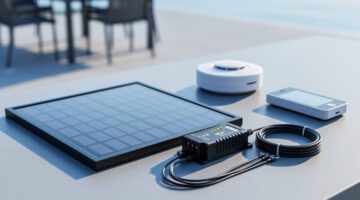
Solar powered devices transform sunlight into electricity to charge smartphones, run garden lights, power security cameras, and keep your laptop running off-grid. The best options for 2026 combine efficient monocrystalline panels, durable weatherproof construction, and battery storage that extends usability beyond daylight hours. Choosing the right solar device depends on matching panel wattage to your power needs, understanding charge times for your use case, and prioritizing portability versus capacity.
The solar device market has matured considerably. What began as niche camping gear now spans portable chargers smaller than a wallet, residential backup power stations exceeding 2,000Wh capacity, and everything between. This expansion coincides with accelerating climate change impacts that make energy independence increasingly attractive to consumers seeking both emergency preparedness and reduced carbon footprints.
Yet abundance creates confusion. Panel efficiency ratings, battery chemistry options, charge controller types, and wildly varying price points make comparison difficult without a framework. Many buyers overspend on capacity they’ll never use, while others underestimate their actual power requirements and end up with devices that can’t handle their essential electronics.
This guide cuts through the complexity. You’ll learn how solar charging actually works in real-world conditions, compare device categories from pocket chargers to whole-home backup systems, identify the specifications that matter most for your situation, and avoid the costly mistakes that trap first-time buyers. Whether you need emergency phone charging during power outages or want to run an off-grid workspace, the right solar device exists. The challenge is finding it.
Understanding Solar-Powered Device Fundamentals
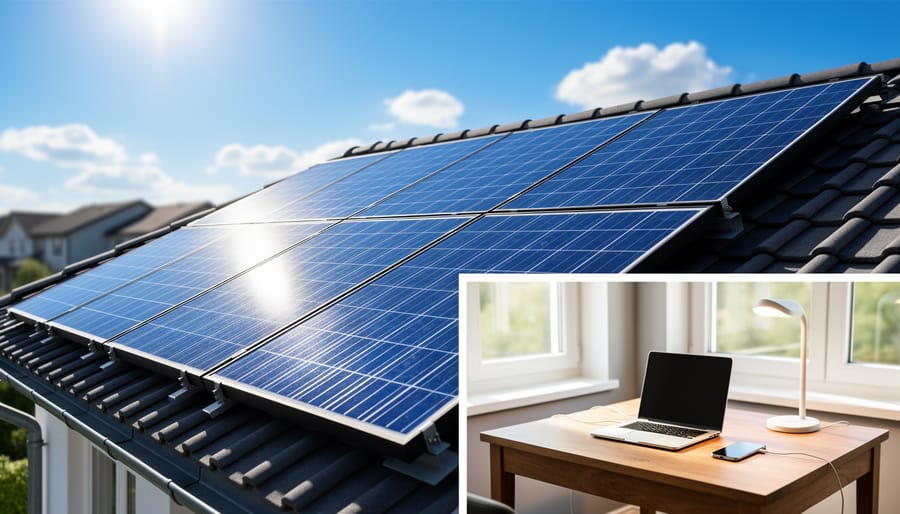
Solar-powered devices convert sunlight into usable electricity through photovoltaic cells, the same technology that powers rooftop solar installations but scaled down for consumer products. When photons from sunlight strike the semiconductor material in these cells, typically silicon, they knock electrons loose and create an electrical current. This direct conversion from light to electricity happens instantly, without moving parts or combustion, making it remarkably simple and reliable for everyday devices.
Most consumer solar products combine three components: the photovoltaic panel that captures sunlight, a battery that stores the converted energy, and a charge controller that regulates power flow to prevent overcharging or damage. The panel generates direct current electricity whenever light hits it, which either powers the device immediately or charges the internal battery for later use. Battery capacity, measured in milliamp-hours (mAh) or watt-hours (Wh), determines how much energy the device can store and how long it will run between charges. A solar phone charger rated at 10,000mAh can typically recharge a smartphone two to three times before needing sunlight again.
Efficiency ratings indicate what percentage of sunlight the panel converts to electricity. Consumer solar devices typically achieve 15-24% efficiency, with monocrystalline panels at the higher end and thin-film options toward the lower range. While these percentages sound modest, they suffice for most portable and small-scale applications when panels are sized appropriately. A 20-watt solar panel under full midday sun generates enough power to charge a laptop, though charging slows considerably in cloudy conditions or indirect light.
The environmental case for solar-powered devices extends beyond eliminating electricity bills. Each kilowatt-hour generated by solar instead of grid power avoids roughly 0.85 pounds of carbon dioxide emissions in the average U.S. electrical grid. A solar security light that operates 3,000 hours annually prevents approximately 128 pounds of CO2 emissions over five years compared to a wired equivalent. For consumers seeking tangible climate action, solar devices offer measurable impact at the household level while providing genuine utility and independence from grid infrastructure.
Types of Solar-Powered Devices Compared
Portable Solar Chargers and Power Banks
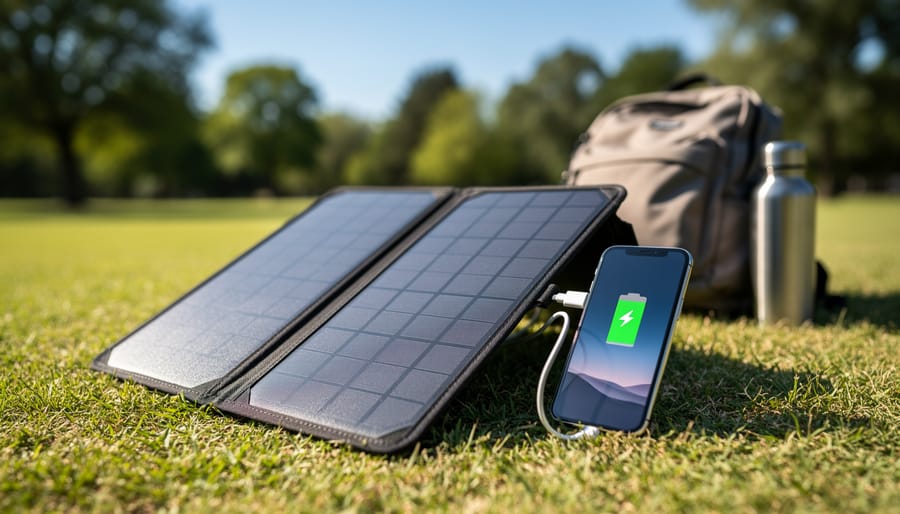
Portable solar chargers and power banks represent the most accessible entry point into solar-powered devices, designed specifically for keeping smartphones, tablets, e-readers, and other USB-powered electronics charged without grid access. These devices integrate photovoltaic panels with lithium-ion or lithium-polymer batteries, capturing sunlight to either charge gadgets directly or store energy for later use. Most models feature 5-25 watt panels paired with battery capacities ranging from 10,000 to 30,000 mAh, sufficient for multiple phone charges under optimal sun exposure.
USB solar chargers without built-in batteries offer lightweight portability but require active sunlight during use, ideal for day hikers who can drape them on backpacks while moving. Power banks with integrated solar panels provide the critical advantage of charging independence: you fill the battery via rooftop or window placement over several days, then carry stored power wherever needed. Emergency-focused models add features like waterproof enclosures, drop-resistant construction, built-in LED flashlights, and dual USB ports for simultaneous device charging. The trade-off lies in weight and size: higher capacity and faster charging demand larger panels and heavier batteries, making portability versus power output the defining decision factor for buyers.
Solar Outdoor and Security Systems
Solar outdoor and security systems represent one of the fastest-growing segments in the consumer solar market, driven by homeowners seeking to cut electricity costs while enhancing property safety. Garden lights now range from decorative accent fixtures producing 10-15 lumens to functional pathway models delivering 100+ lumens, with most using monocrystalline panels that charge in six to eight hours of direct sunlight. Motion-sensor floodlights typically require larger panels and 2000-3000mAh batteries to power 500-800 lumen LEDs through multiple activations per night. Solar security cameras have advanced considerably: current models feature 1080p resolution, infrared night vision, and rechargeable batteries that maintain surveillance for three to five days on a full charge, making them viable alternatives to wired systems for perimeter monitoring. The key advantage across all these devices is installation flexibility, you can position lights and cameras based on optimal security coverage rather than proximity to electrical outlets, and most systems activate automatically at dusk without programming. When evaluating outdoor solar devices, prioritize IP65 or higher weather ratings for year-round durability, check that battery capacity supports your region’s winter daylight hours, and verify that motion detection ranges match your coverage needs rather than simply comparing brightness specifications.
Home Solar Appliances and Gadgets
Solar-powered home appliances represent the frontier where sustainability meets everyday convenience, transforming how households manage energy for routine tasks. These devices integrate photovoltaic panels directly into functional equipment, reducing grid dependence while maintaining performance.
Solar ventilation fans rank among the most practical applications, drawing hot air from attics, greenhouses, and enclosed spaces without wiring or electricity costs. Attic models typically feature 10-30 watt panels that power fans capable of moving 800-1,500 cubic feet of air per minute, cutting cooling loads by 10-20 percent during summer months. Installation requires only a roof-mounted panel connected to a gable or ridge vent, making them ideal for homes where traditional electrical runs prove expensive.
Solar water heating systems, while requiring larger panel arrays and professional installation, deliver substantial long-term savings. These systems use collectors to heat water circulating through pipes, either directly warming household water or transferring heat through exchange systems. In sunny climates, they can supply 60-80 percent of a household’s hot water needs, with payback periods of 5-8 years depending on local utility rates.
Smaller gadgets like Bluetooth speakers, outdoor thermometers, and decorative fountains demonstrate how solar integration works at minimal power scales. Quality solar speakers deliver 6-8 hours of playback from panels that charge during daytime placement on patios or windowsills. These devices suit users testing solar technology before committing to larger installations, offering tangible proof that photovoltaic power handles real daily demands beyond emergency backup scenarios.
Recreational and Emergency Devices
Recreational and emergency solar devices prioritize reliability when conventional power isn’t available. Camping lanterns remain the most popular category, with models ranging from compact LED lights providing 100-300 lumens for close-range tasks to high-output lanterns exceeding 1,000 lumens capable of illuminating entire campsites. Look for collapsible designs that maximize portability and multiple brightness settings to conserve battery during extended trips.
Solar-powered emergency radios combine AM/FM reception with NOAA weather alerts, often including USB charging ports to power phones during outages. Quality models integrate hand-crank backup generators alongside solar panels, ensuring functionality even during prolonged cloud cover. Many include built-in flashlights and SOS beacons, consolidating multiple survival tools into one device.
Coolers with integrated solar panels maintain refrigeration temperatures for perishables without draining vehicle batteries, though they require larger panel arrays and work best as supplemental cooling rather than primary refrigeration. Survival equipment like solar water purifiers and GPS trackers offer critical functionality in true emergency scenarios, where the ability to operate independently of fuel or grid power can prove life-saving. When selecting recreational and emergency solar devices, prioritize ruggedized construction, IPX6 or higher water resistance ratings, and brands with proven field performance rather than maximum theoretical capacity.
Essential Factors When Choosing Solar-Powered Devices
Power Requirements and Battery Capacity
Matching a solar device’s power output to your actual needs prevents frustration and wasted money. Start by checking your device’s power consumption, usually listed in watts (W) or milliamps (mA) on the product label or manual. A smartphone typically draws 5-10W during charging, while a laptop requires 45-65W. Solar panels are rated by their maximum output under ideal conditions, a 20W panel produces that wattage only in direct, perpendicular sunlight.
Battery capacity determines how much energy a solar device stores for later use, measured in watt-hours (Wh) or amp-hours (Ah). To convert amp-hours to watt-hours, multiply by voltage: a 10,000mAh (10Ah) power bank at 3.7V provides 37Wh, enough to fully charge most phones twice. Divide the battery capacity by your device’s consumption rate to estimate charging cycles. A 100Wh solar generator running a 10W LED lamp delivers roughly 10 hours of light, accounting for conversion losses.
Size your solar equipment with a 20-30% buffer above minimum requirements. If you need 50Wh daily, choose a system rated for at least 65Wh to compensate for cloudy days and panel degradation. Consider usage patterns: continuous daytime operation demands higher panel wattage, while overnight use prioritizes battery capacity over instant solar output.
Panel Quality and Conversion Efficiency
Solar panel technology directly determines how much energy your device captures from available sunlight. Monocrystalline panels, made from single-crystal silicon, deliver the highest efficiency (18-24%) and perform better in limited space and indirect light. They appear uniform black and cost more, but their superior conversion rates mean faster charging even on partly cloudy days. Polycrystalline panels use multi-crystal silicon, offering moderate efficiency (15-18%) at lower prices with a blue, fragmented appearance. Thin-film panels are flexible and lightweight but least efficient (10-13%), making them suitable only for low-power devices where portability outweighs performance.
In real-world conditions, efficiency ratings matter more than marketing suggests. A 20% efficient panel converts one-fifth of available sunlight into electricity, while a 15% panel requires more surface area for equivalent output. This difference compounds over time, affecting both charging speed and long-term reliability as long-term climate trends shift seasonal sunlight patterns. For portable devices, prioritize monocrystalline panels above 18% efficiency. For stationary applications where space is abundant, polycrystalline panels offer acceptable performance at better value.
Build Quality and Environmental Durability
Solar-powered devices earn their value through durability, not just initial performance. The best panels and batteries mean nothing if the housing cracks after one season outdoors or internal components corrode from moisture exposure.
Start with IP ratings, the two-digit code that reveals protection levels against dust and water. An IP65 rating offers dust-tight seals and protection against water jets, suitable for most outdoor lighting and security cameras. Portable chargers heading into camping environments should meet at least IP67 (submersion-resistant to one meter) to survive rain, spills, and dusty trails. Devices rated below IP54 belong indoors or under permanent shelter only.
Temperature tolerance separates reliable solar devices from those that fail when you need them most. Quality units operate across -20°C to 60°C (-4°F to 140°F), maintaining function during winter camping trips and summer heat waves. Cheaper models often specify narrower ranges, risking battery damage and reduced charging capacity in extreme conditions. Check manufacturer specs carefully, vague terms like “weather-resistant” without temperature ranges signal corner-cutting.
Material choice matters. Reinforced ABS plastic housings resist UV degradation and impacts better than standard polycarbonate. Aluminum frames add weight but provide superior heat dissipation and structural integrity for permanent installations. Sealed charging ports with rubber gaskets prevent moisture intrusion, while tempered glass or ETFE film over solar panels withstands hail and scratches that destroy cheaper alternatives. Examine seams and joins, poor construction shows through visible gaps and flimsy connections that fail after minimal outdoor exposure.
Recommended Solar-Powered Devices for Different Needs
For Daily Phone and Tablet Charging
For keeping your phone and tablet charged during commutes, at the office, or during outdoor activities, you need a solar charger that delivers at least 10-15 watts of output. Models in this range can fully charge a smartphone in 2-3 hours of direct sunlight, making them practical for daily use rather than just emergency backup. Look for dual-port chargers that let you power multiple devices simultaneously, essential if you carry both a phone and tablet.
The best everyday solar chargers fold into compact sizes (roughly a paperback book) and weigh under a pound, fitting easily into backpacks or messenger bags. Prioritize models with built-in kickstands or hanging loops that let you angle the panels toward the sun while you work or rest nearby. Built-in battery storage adds convenience but increases weight; if you mostly charge devices directly during daylight hours, a panel-only unit keeps your setup lighter and more affordable.
Pay attention to smart charging technology that adjusts output to match your device’s requirements, this prevents damage to sensitive electronics and optimizes charging speed. A USB-C port alongside standard USB-A gives you flexibility for newer tablets and phones without carrying multiple adapters.
For Outdoor Adventures and Camping
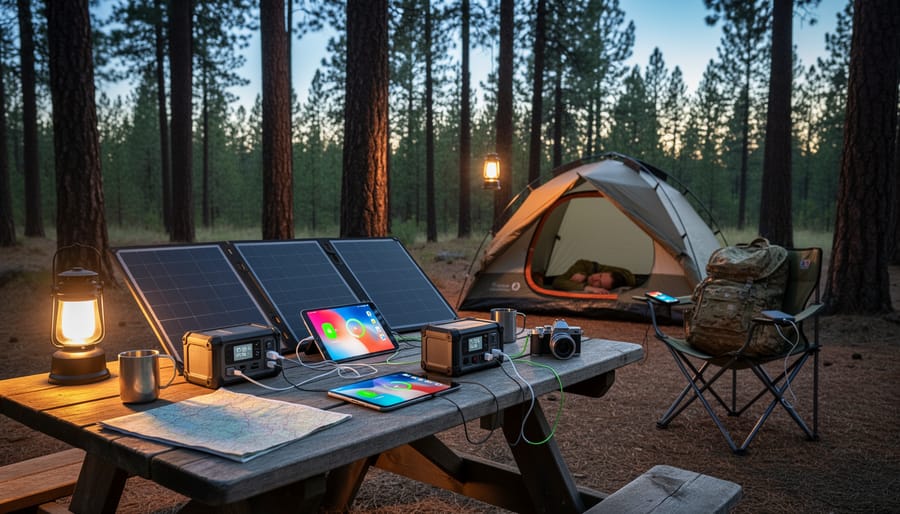
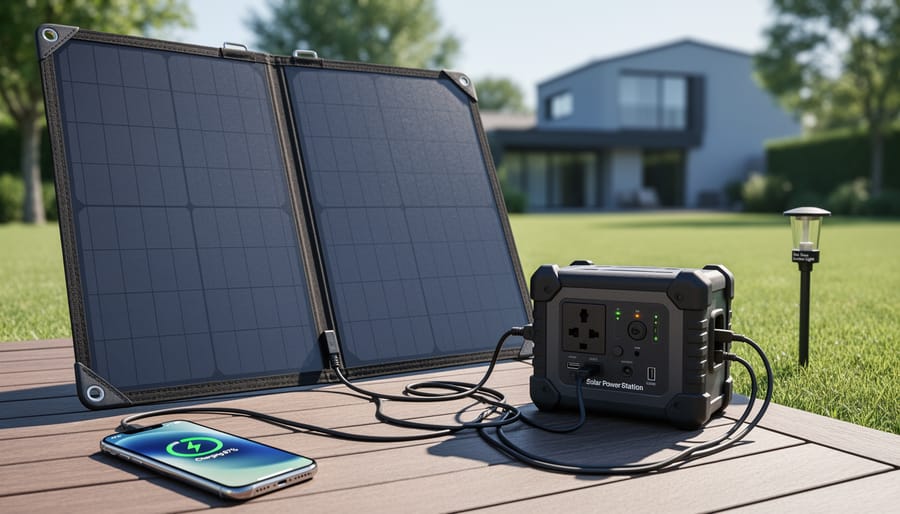
Backcountry environments demand solar devices engineered for harsh conditions and extended off-grid operation. For multi-day treks, a 100-watt foldable solar panel paired with a 500-watt-hour portable power station provides sufficient capacity to charge phones, headlamps, GPS units, and cameras without rationing power. These stations typically weigh 12-15 pounds but deliver reliable energy for groups or expedition-length trips.
Inflatable solar lanterns offer packable lighting that collapses to pocket size yet provides 12 hours of illumination on a full charge. Choose models with impact-resistant housings rated IP67 for water and dust protection, backcountry gear faces drops, rain, and dusty trails daily. Solar shower bags with built-in heating panels transform cold creek water into warm showers after three hours of sun exposure, adding comfort without extra fuel weight.
For fast-and-light backpackers, 21-watt solar chargers with dual USB ports directly charge devices during movement when strapped to pack exteriors. Look for monocrystalline panels that maintain 22% efficiency even under partial cloud cover, paired with built-in voltage regulators that prevent damage to sensitive electronics during fluctuating sunlight conditions.
For Home Security and Outdoor Lighting
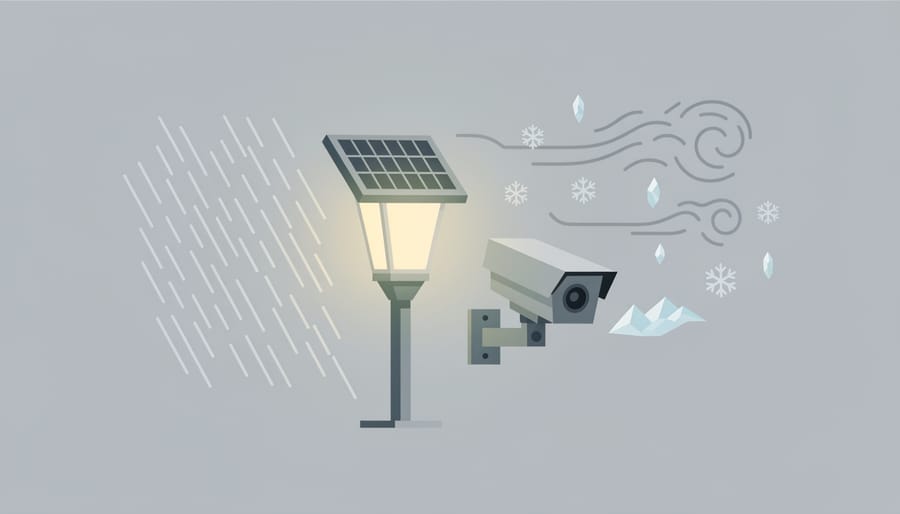
Solar motion-sensor lights and security cameras excel at perimeter monitoring without adding to your electric bill. Look for models with adjustable sensitivity settings and detection ranges of at least 25 feet, this prevents false triggers from wildlife while capturing genuine activity. Quality outdoor solar cameras like the Ring Spotlight Cam Solar or Reolink Argus 3 Pro pair high-resolution recording with rechargeable batteries that last multiple cloudy days, eliminating the need for constant repositioning toward sunlight.
For pathway and garden lighting, prioritize fixtures with dusk-to-dawn sensors and replaceable batteries. Stainless steel or aluminum housings withstand weather far better than plastic alternatives. Separate the panel from the light fixture when possible, this lets you optimize panel placement for sun exposure while positioning lights where you actually need illumination, rather than compromising on both.
For Emergency Preparedness
When the power grid fails, solar-powered emergency devices become critical lifelines, providing light, communication, and essential charging capability without relying on mains electricity or finite battery reserves. A multi-band solar radio with hand-crank backup, such as models from Midland or Eton, delivers NOAA weather alerts, AM/FM reception, and USB charging ports, ensuring you stay informed during prolonged outages. Pair this with a high-lumen solar flashlight or lantern that charges during the day and runs for 8-12 hours at night; look for units with multiple brightness settings to conserve energy. For device charging, choose a ruggedized solar power bank rated for at least 20,000mAh with dual USB outputs, enabling you to recharge phones, tablets, and medical devices multiple times from a single solar charge cycle. Prioritize models with built-in LED indicators, waterproof ratings above IPX4, and drop-resistant construction, emergency gear must withstand harsh conditions and rough handling when you need it most.
Common Mistakes to Avoid When Buying Solar Devices
The biggest mistake consumers make is trusting inflated efficiency claims and solar panel ratings without considering real-world conditions. Manufacturers test panels under ideal laboratory conditions that rarely match actual usage environments. A charger claiming 25% efficiency in direct, perpendicular sunlight will perform far worse on cloudy days, through windows, or when positioned at suboptimal angles. This gap between advertised and achieved performance leads to frustration and unrealistic charging expectations.
Battery degradation represents another commonly overlooked factor. Lithium-ion batteries in solar devices lose capacity over time, typically retaining 80% of original performance after 500 charge cycles. Buyers who focus solely on initial capacity without considering degradation patterns end up with underperforming devices within two years. Check manufacturer specifications for cycle life and capacity retention curves rather than just peak battery capacity.
Incompatible charging specifications create needless complications. Not all USB ports deliver the same power, and voltage mismatches can damage devices or result in painfully slow charging. Verify that output specifications match your devices’ input requirements, particularly for laptops and tablets requiring higher wattage than standard smartphone charging.
Watch for these red flags when evaluating products:
- Vague efficiency percentages without testing conditions specified
- Suspiciously low prices for claimed high-wattage output
- Absence of IP ratings for weather resistance
- Generic brand names with no verifiable manufacturer history
- Customer reviews mentioning rapid performance decline
- Warranty periods shorter than 12 months
Weather protection ratings matter more than most buyers realize. An IPX4 rating might protect against splashing, but extended exposure to rain or weather patterns in humid climates demands IPX6 or higher. Temperature extremes also degrade solar cells and batteries faster than advertised. Devices lacking proper environmental ratings fail prematurely when used outdoors regularly, turning apparent bargains into expensive replacements.
Maximizing Value and Performance From Your Purchase
Getting the most from your solar-powered devices requires strategic positioning, consistent maintenance, and realistic performance expectations. Many users abandon perfectly good solar devices simply because they didn’t understand how to optimize their use or set appropriate expectations based on their environment.
Panel Positioning and Maintenance
Position panels to face true south (in the Northern Hemisphere) with minimal obstruction from trees, buildings, or overhangs. Even partial shading can reduce output by 50% or more. Clean panels monthly with a soft cloth and mild soap, dust, pollen, and dirt accumulation can decrease efficiency by 15-25% over time.
Inspect connections and seals quarterly, especially after storms. Corrosion at charging ports represents the most common failure point for outdoor solar devices. Apply dielectric grease to exposed connectors and replace worn gaskets promptly. Store removable panels indoors during extended periods of non-use to prevent UV degradation of plastic components.
Setting Realistic Expectations
Charging performance varies dramatically by season and latitude. Devices in Phoenix generate roughly 40% more annual energy than identical units in Seattle. Winter months in northern climates may provide only 3-4 hours of effective charging compared to 8-9 hours in summer. Account for climate variability and local weather patterns when calculating expected output.
Don’t rely exclusively on solar for critical applications in regions with frequent overcast conditions. Hybrid approaches work best: use solar as your primary source while maintaining grid or battery backup for reliability. A 20,000mAh power bank charged via solar during good weather provides backup during cloudy stretches.
How long does it take to fully charge a solar power bank?
Most 10,000-20,000mAh solar power banks require 25-40 hours of direct sunlight for full charge via their built-in panels, though USB charging completes in 6-8 hours. Built-in panels work best as emergency backup rather than primary charging method.
Do solar devices work on cloudy days?
Yes, but at significantly reduced capacity, typically 10-25% of full-sun output. Heavy cloud cover may not generate enough power to charge devices actively but can maintain battery levels or provide trickle charging.
How often do solar device batteries need replacement?
Quality lithium batteries in solar devices last 500-1,000 charge cycles (roughly 2-4 years of regular use) before capacity drops to 80%. Avoid deep discharges and extreme temperatures to maximize lifespan.
Can I use solar devices effectively in winter?
Yes, though output decreases due to shorter days and lower sun angles. Cold temperatures actually improve panel efficiency, but snow accumulation blocks panels and must be cleared promptly.
Measuring Real Returns
Track actual energy production against purchase cost. A $60 solar charger providing 15 watt-hours daily saves roughly $2-3 annually in grid electricity, a 20-year payback if energy savings alone justify the purchase. The real value comes from convenience, backup power, and reduced environmental impact rather than pure financial returns. One California household integrated five solar devices (outdoor lights, phone charger, garden fountain, pathway markers, and security camera) and eliminated 180 kWh of annual grid consumption while gaining reliable operation during their region’s increasing power shutoffs.
What to Look For
When evaluating solar powered devices, prioritize three fundamental criteria: actual power delivery, build quality, and total cost of ownership. Start with real-world wattage rather than theoretical maximums, a charger rated at 20W in direct sunlight might deliver only 8-10W under typical conditions. Check whether the battery capacity aligns with your devices’ needs; a 10,000mAh power bank charges most smartphones twice but won’t power a laptop.
Construction quality determines longevity. Look for IP ratings above IP65 for outdoor use, reinforced USB ports that resist moisture intrusion, and tempered glass or ETFE coatings on panels rather than cheaper PET films. These materials separate devices that last five years from those failing within eighteen months.
Consider the environmental tipping points your purchase addresses by calculating payback period, how long until energy savings offset the initial cost. A solar security light replacing grid power pays for itself faster than a decorative garden stake. Warranty length signals manufacturer confidence; anything under two years raises questions. Finally, future-proofing matters, choose devices with replaceable batteries and standard charging ports rather than proprietary connections that become obsolete.
Choosing solar-powered devices that match your needs doesn’t require perfect conditions or unlimited budgets, it requires understanding what you’ll actually use and where. Start with one device addressing a clear pain point: a portable charger for weekend trips, motion lights replacing grid-powered outdoor fixtures, or an emergency radio for your preparedness kit. Each successful integration builds confidence and demonstrates how solar technology fits your routine.
The consumer market has shifted from novelty gadgets to practical alternatives with proven reliability. Today’s solar-powered devices deliver measurable performance when you match panel efficiency, battery capacity, and build quality to your intended use case. You’ll avoid disappointment by setting realistic expectations about charging times, respecting weather limitations, and choosing reputable manufacturers with solid warranties.
Every device you power with sunlight reduces your carbon footprint while decreasing dependence on the grid. That combination of environmental impact and personal resilience makes solar technology increasingly relevant, whether you’re seeking backup power, lower electricity bills, or simply reducing your environmental impact. The options will continue improving, but the devices available now already represent viable solutions for everyday needs. Assess what you’ll genuinely use, apply the selection criteria we’ve covered, and make your first purchase with confidence.