What Is the Latest Technology in Solar Energy (and How Does It Work)?
Latest solar technology refers to the newest ways of turning sunlight into electricity: perovskite-silicon tandem cells that stack two light-absorbing layers, bifacial panels that collect light on both sides, flexible and transparent solar that fits onto surfaces once off limits, and AI-powered systems that manage output more intelligently. Together, they make solar more powerful, affordable, and versatile.
The numbers show how fast things are moving. In 2026, a perovskite-silicon tandem cell set a new certified record of 35.5% efficiency, while most residential panels today sit well over 20%. That gap is the story. It points to a future where the same rooftop or field produces far more energy.
Why does this matter now? Because the climate impacts 2026 has brought into focus make cleaner power an urgent practical need, not a distant goal. Better efficiency and lower costs speed up adoption across homes, businesses, and utility-scale projects.
This article explains how each technology works, where it’s used, and how the leading panel types compare, so you can separate genuine progress from hype.
What Solar Energy Advancements Actually Mean
Every solar panel runs on the same basic idea. Sunlight hits a semiconductor, usually silicon, and knocks electrons loose. Those freed electrons flow as an electric current, and that current powers your home, your school, or a city grid. What has changed is how cleverly engineers now capture that light.
The yardstick here is efficiency: the share of sunlight a panel converts into electricity. Most residential panels today sit well over 20%, and a perovskite-silicon tandem cell recently set a certified record of 35.5%. A few percentage points may sound modest, but they compound. More power from the same roof means fewer panels per home, more output per square meter on a business rooftop, and far more electricity across a utility-scale project covering thousands of panels.
A few terms will help as we go:
- Photovoltaic cell
- The basic building block of a solar panel, which turns sunlight directly into electricity.
- Efficiency
- The percentage of incoming sunlight a cell or panel converts into usable power.
- Perovskite
- A class of crystal-structured materials that absorb light well and can be layered onto other cells.
- Tandem cell
- A cell that stacks two light-absorbing layers so each captures a different part of the spectrum.
- Bifacial panel
- A panel that collects sunlight on both its front and back sides.
Four themes define the latest technology in solar energy in 2026: perovskite tandem cells, flexible solar, transparent panels, and AI-powered systems. Together, they are making solar more powerful, affordable, and versatile across residential, commercial, and utility-scale projects. The next section shows how each one works.
How the Newest Solar Technologies Work
Perovskite-Silicon Tandem Cells: Two Layers, More Light
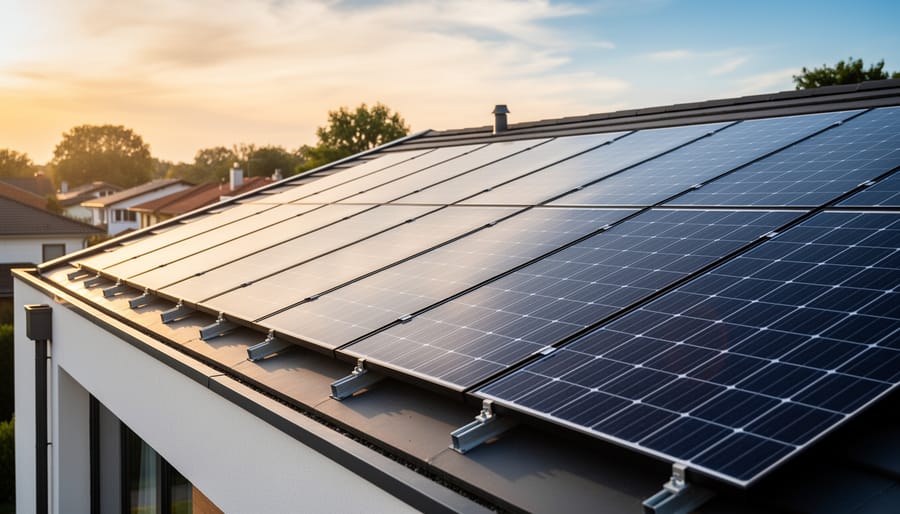
A standard silicon cell has a built-in ceiling, because one material can only turn a certain slice of the light spectrum into electricity efficiently. Tandem cells get around that by stacking two layers, each tuned to a different job.
The perovskite layer sits on top and captures the higher-energy light, the blues and greens. Whatever passes through reaches the silicon layer below, which is better at absorbing the lower-energy red and infrared light. Instead of letting one material waste what it handles poorly, the two layers share the work and pull more power from the same sunlight.
That division of labor is why a perovskite-silicon tandem cell set a new certified record of 35.5% efficiency in 2026. For context, most residential panels today sit well over 20%, so the gap is substantial. Related tandem results are also being reported elsewhere, including a 35.24% certified confirmation, which suggests the approach is gaining real momentum rather than resting on a single result.
There’s a cost angle too. According to 8MSolar, perovskite panels offer higher efficiency at a lower price point than traditional silicon-based panels. Higher output for less money is exactly the pairing that makes a technology worth watching, even as questions about when and where these panels will be widely available remain open.
Bifacial Panels: Harvesting Light From Both Sides
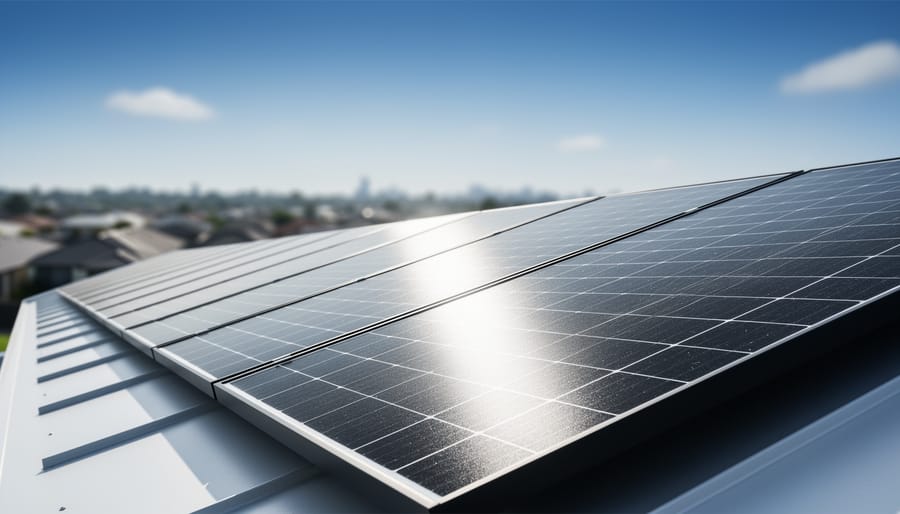
Most solar panels collect light on one side only. Bifacial panels work differently: the front face takes in direct sunlight, while the back face picks up light that bounces off the ground, a rooftop, or nearby surfaces. That reflected light, which a conventional panel simply wastes, becomes extra electricity.
The payoff is more power from the same footprint. Because the panel harvests sunlight from both sides, it generates more from the same area without needing more land or roof space. For anyone working with limited room, that matters.
How much you gain depends on the setting. A light-colored surface beneath the panels reflects more light than dark pavement or shaded ground, and the mounting height and angle change how much reaches the rear.
Bifacial design is not the only reason solar keeps improving. 8MSolar notes that perovskite and bifacial panels have increased efficiency and reduced costs, a pairing that helps explain why solar is becoming more affordable and versatile. Better performance at a lower price is exactly what makes broader adoption realistic.
Flexible, Transparent, and AI-Powered Solar
Beyond tandem cells and bifacial designs, three other approaches round out the 2026 landscape: flexible solar, transparent panels, and AI-powered systems. Each solves a different problem.
Flexible solar uses thin, lightweight cell layers that can bend instead of sitting in a rigid glass-and-aluminum frame. That opens the door to surfaces a conventional panel can’t easily handle, like curved or irregular structures, because the technology adapts to the building rather than the other way around.
Transparent panels take a different route. They’re designed to let visible light pass through while still producing electricity, so a window can double as a power source. Together with solar roof tiles, they point toward solar that blends into a building instead of sitting on top of it, which also makes integration easier and more aesthetically pleasing.
AI-powered systems work on the software side. Instead of changing the cell itself, they aim to optimize how a solar installation performs, helping systems get more from the hardware already in place.
None of these ideas works alone. Their value lies in how they widen the places and ways solar can be used, which is exactly why this toolkit is accelerating adoption across homes, businesses, and larger projects. What you gain isn’t one miracle panel, but more options.
Where Advanced Solar Is Being Used
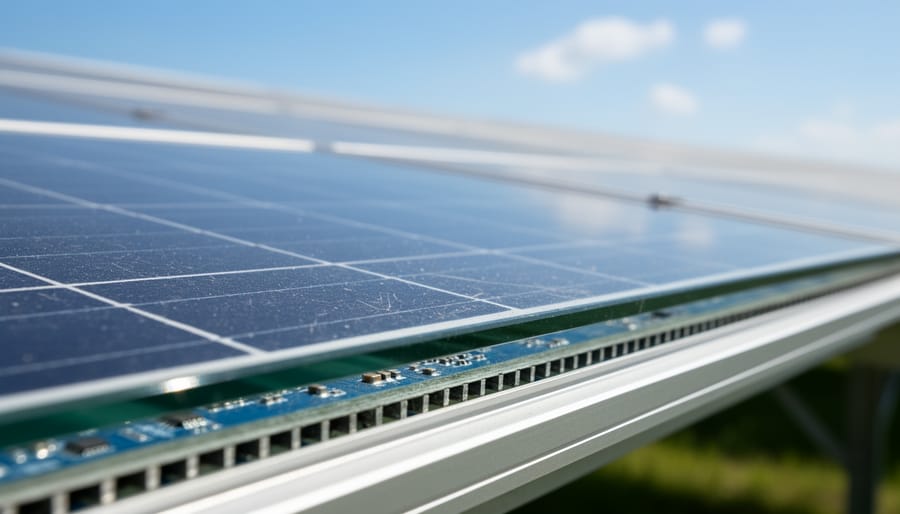
These advances are not staying in the lab. According to GreenLancer, they are making solar technology more powerful, affordable, and versatile, and that is speeding up adoption across residential, commercial, and utility-scale projects. The same panel family doesn’t suit every job, though, so it helps to match each technology to the place it works best.
- Rooftops: higher-efficiency panels, including perovskite and bifacial designs, make the most of limited roof space.
- Building facades and windows: transparent panels and integrated solar windows let a building generate power without adding bulky equipment.
- Large utility-scale arrays: bifacial panels capture sunlight from both sides, generating more power from the same area.
- Space-constrained sites: efficiency gains matter most where every square meter has to earn its keep.
- Curved or lightweight surfaces: flexible solar can go where rigid, heavy panels can’t.
For a homeowner, the shift may be most visible in how solar looks. Solar roof tiles and windows are making it easier to bring solar into homes and buildings, and more aesthetically pleasing too. A roof that doubles as a power source, or a window that quietly generates electricity, removes one of the oldest objections to going solar: that panels spoil the look of a house.
Commercial buildings have a similar opportunity. Offices, schools, and shops often have plenty of glass and facade area but limited roof space. Transparent and integrated designs open up surfaces that were never available to conventional panels, which could let institutions meet more of their own energy needs on the footprint they already have.
At the utility scale, the logic is about squeezing more out of every acre. Perovskite and bifacial panels have increased efficiency and reduced costs, so a project can produce more electricity per unit of land. When efficiency rises and costs fall together, solar becomes a practical choice in more settings, from a single home to a large array.
How TOPCon, HJT, and Perovskite Compare
So which technology leads? It depends on what you measure. On raw efficiency, perovskite-silicon tandem cells hold the verified record, a certified 35.5% set in 2026. On everyday availability and track record, the silicon-based designs most people already know still do the heavy lifting.
TOPCon and HJT are both refinements of silicon cells. Think of them as the dependable workhorses: mature, well understood, and aimed at squeezing more power from a material the industry has spent decades perfecting. Perovskite is the newcomer. Sources tracking the field say perovskite panels offer higher efficiency at a lower price point than traditional silicon-based panels, which is exactly why researchers are excited. Stacking it on silicon, as tandem cells do, is how the record was reached.
What should you weigh? Efficiency potential matters most when roof space is tight. Cost direction matters when budgets are the constraint. Maturity matters when you want a long, proven history behind the product. Perovskite wins on potential, while silicon-based options win on familiarity. Exactly how soon tandem products reach the broader market is still unsettled, so treat the record as a signal of where things are heading rather than a shopping recommendation.
If you’re new to this vocabulary, it helps to understand the basics first, such as what is a Q panel, before comparing the finer points of each cell design.

What to Look for as These Technologies Mature
Headline records make for great news, but a certified 35.5% in a lab is not the same as a panel on your roof. The smartest move is to learn how to read the claims, so you can tell progress from promotion as these technologies mature.
Start with the questions you put to an installer. Ask which cell technology is in the panel and why they chose it. Ask how the panel performs in your climate, not just under ideal test conditions. Ask what the warranty covers and how long, and who stands behind it if the manufacturer changes. If a product is described as the latest breakthrough, ask whether it is a commercial module or a lab result.
Efficiency ratings deserve the same care. A rating tells you how much sunlight a panel converts to electricity, which matters most when space is tight. It says nothing about price, durability, or how the system behaves over many years. Most residential panels today already sit well over 20%, so a few points of difference may matter less than cost and reliability.
Roof space and orientation still do much of the work. Shading, tilt, and the direction your roof faces shape output no matter how advanced the panel is. A better cell cannot rescue a poorly placed array.
To track the shift from lab to market, watch for independent certification and for products that appear with real warranties and installers behind them. Availability and policy adoption are still developing, so treat any firm promise about timing with some skepticism.
Whether you are a student, a teacher, or a policy-maker, staying curious and asking sharp questions is the most constructive thing you can do. Informed demand is what pulls good technology from the lab into the world.
Frequently Asked Questions About New Solar Technology
Is solar efficiency improving?
Yes. Most residential panels today sit well over 20% efficiency, and in 2026 a perovskite-silicon tandem cell set a certified record of 35.5%. Perovskite and bifacial designs have also pushed efficiency up while bringing costs down.
What are the latest solar panel technology trends in 2026?
The trends to watch are perovskite tandem cells, flexible solar, transparent panels, and AI-powered systems. Solar roof tiles and windows are also making it easier to blend solar into homes and buildings.
Which solar panel technology leads in 2026?
On efficiency, perovskite-silicon tandem cells hold the verified record at 35.5%. Leading on a lab record is not the same as leading in your neighborhood, so check what installers can actually offer you.
How do TOPCon, HJT, and perovskite compare?
Each balances efficiency potential, cost direction, and maturity differently. Perovskite offers higher efficiency at a lower price point than traditional silicon-based panels, but I can’t promise when it will reach your roof.
If you’re sorting through real options, our solar buying guide walks you through the practical questions to ask before you commit. And if storage is part of your plan, it’s worth understanding how solar lithium batteries fit into the picture.
Solar energy is changing fast. A tandem cell now holds a certified 35.5% efficiency record, and that milestone is only part of the story. The same wave of innovation is giving us bifacial panels that catch light from both sides, flexible and transparent designs, and roof tiles and windows that turn buildings themselves into power sources. What began as lab results is becoming a broader, more adaptable toolkit.
You don’t need to be an engineer to take part in this shift. Keep learning how these technologies work, and ask sharper questions about the options in front of you, whether you’re choosing panels for a roof, planning for a school, or shaping local policy. Informed choices speed up the transition. The sun is already doing its part.