

Cancun

Cancun Agreements a success?

Posted by Cancun Team on December 23, 2010
COP 16-Cancun, Developing Countries / No Comments

Article by Guest Contributor: Joelle Westlund

With the closing of the 16th Conference of Parties convention, participants have shelved their decision making until the COP17 in South Africa. Developing countries have left the conferences with reasonable promised support from developed countries and the additional challenge of resisting Japan’s stance on future agreements.

Developing countries did see an agreement materialize which stipulates the establishment of the Cancun Adaptation Framework as well as the process to design the Green Climate Fund. While not a binding agreement, the agreement made important progress insofar as its provisions on adaption, avoidance of deforestation, technology transfers, mitigation and finance. Other decisions that were reached covered capacity building, institutional matters, and the use of standardized baselines in clean development mechanism projects (CDM). The Green Climate Fund is expected to help attract investment in developing countries to obtain technologies to address climate change issues. The Fund reaffirms the commitment to deliver $30 billion in funds through 2012 and to reach $100 billion by 2020. This is expected to help speed up the deployment of clean energy and assist developing countries in adapting to the impacts of climate change.

What is required of developing countries under the agreement is an improvement in their reporting on emissions and actions taken to reduce emissions. Reporting is expected to occur ever two years in attempts to increase counties’ transparency and progress made in their commitments.

Environment Minister Jairam Ramesh has stated “India’s interests [have] been fully protected and enhanced” in the Cancun Agreement despite India’s Center for Science and Environment (CSE) disagreeing with such claims. CSE has said “The agreement is bad for climate change action [because] there is no global emission reduction target for 2050; nor is there a target for peaking year.” However the agreement has a unique emphasis on developing countries adapting to the effects of climate change – something that has not be greatly covered in other accords.

Yet the continuation of the Kyoto Protocol remains at the forefront of debates. Japan has received significant criticism from developing countries that believe that the country is evading its responsibilities. A representative of Uganda proclaimed, “Japan is the mother of the Kyoto Protocol. Do you intend to dump your own child?” However as on U.N. official noted, developing countries have no intention of participating in any international framework that forces them to substantially reduce their greenhouse gas emissions.

Looking towards the COP17 conference in South Africa, the agreement has demonstrated positive negotiation potential between China and the United States. The two countries, which set off to the conference inflexible and persistent, were able to come to a swift compromise on components of the Cancun Agreement. The key issues addressed by China were the support for developing countries, financially and with technology transfers. These concerns were clearly addressed in the establishment of the Fund, though China stated it would not be accepting financial assistance from the Fund. Other major concerns for China are cooperation and maintaining the structure of previous agreements; all of which became important elements of the agreement.

While these modest advancements may reflect the low expectations for the outcomes of the COP16, they represent important potential for next year’s conference. China and the United States demonstrated their ability to reach substantial compromises towards a potential legally binding agreement. India, as well remains an crucial participant in these negotiations and will no doubt play a significant role in the establishment of agreements in the upcoming conference.

Tags: , , ,

Cancun Agreements on Technology Transfer

Posted by Cancun Team on December 18, 2010
COP 16-Cancun, Technology Transfer / No Comments

Article by Guest Contributor: Veronika Shirokova

MSU solar refrigerator being installed during a Spring 2009 Workshop in Guatemala. Hosted by ATC at AIDG in Xela. (Image by: jsbarrie)

COP16 saw a modest advancement in negotiations on Technology Transfer, guided by a framework established during an earlier meeting in New Delhi. Participants agreed upon the preliminary structure of a Technology Mechanism, creating a Technology Executive Committee (TEC) and a Climate Technology Centre and Network (CTCN).

The TEC will have an advisory and administrative role, identifying technology needs and priorities, coordinating efforts, and providing recommendations for improvement. It will consist of a panel of 20 experts, 11 from developed countries and 9 from developing countries. Parties have yet to nominate, or establish the qualification criteria for, committee members.  The framework is sufficiently rigorous for the TEC to begin its activities immediately after suitable candidates are found.

The CTCN, consisting of a centre and a large network, will serve an operative role in technology transfer on an international to regional scale. It will function mainly to carry out the TEC’s directives, as well as to facilitate and improve upon existing initiatives. The interactions between the Centre and within the Network are still ill-defined, and will be subject to negotiation over the following year. As a consequence, the CTCN is still far from being a working arm of the Technology Mechanism. Further, the relationship between the TEC and the CTCN is unclear, as is how the Technology Mechanism will relate to the Financial Mechanism.

Due to strong resistance from developed countries, participants deliberately omitted discussion on the contentious issue of Intellectual Property Rights (IPR).  Developing countries are frustrated by the mutually conflicting conditions of the Cancun Agreements; they are being told to stop or skip over the usage of fossil fuels in favour of green energy, but are unable to access the necessary technology due to restrictive IPR. Companies may reach concessions on practical pricing and conditions, but are concerned that their patents will not be upheld in countries with weak IPR enforcement.

Overall, the climate talks in Cancun represent significant progress in the design of a new Technology Mechanism. However, technology transfer will face significant barriers due to difficulties with financing and IPR, and is unlikely to succeed until these issues are resolved.

Tags: , , ,

Can India achieve a compromise?

Posted by Cancun Team on December 06, 2010
COP 16-Cancun, Developing Countries / No Comments

Article by Guest Contributor: Joelle Westlund

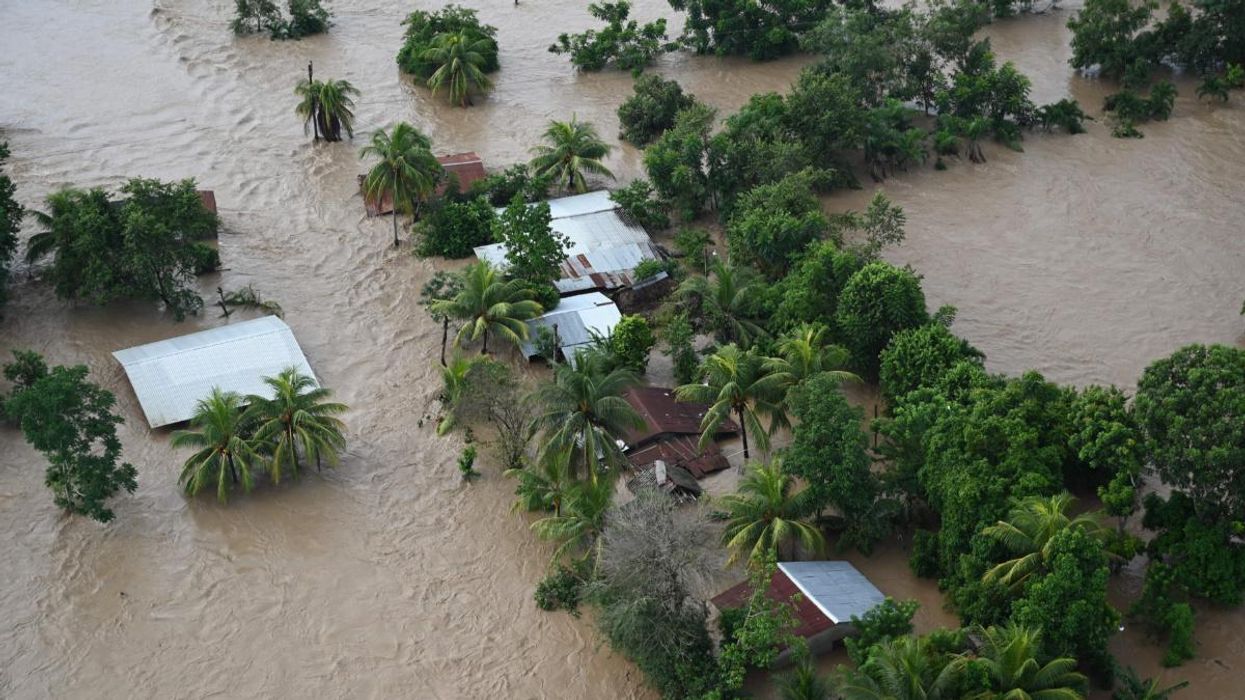
Bangladesh Floods (source: oneworld.net)

A week into the climate talks in Cancun, developing countries seem to be witnessing a regression in commitments to the mitigation of climate change. The contention over the continuation of the Kyoto Protocol has now increased with Japan’s new stance. On December 3, 2010, Japan joined Canada, Russia, and the U.S. in the position that the binding agreement should not extend beyond 2012. Such a transition in perspective will likely weaken the potential for China, India and other developing countries to push forward with climate agreements.

After Wednesday’s review of the Protocol’s 2010 performance by the CDM Executive Board, various countries welcomed improvements on the current program. Presently, the program enables developed countries to offset their emissions through projects in developing countries; consequently, any reduction or move away from the Protocol would have substantial effects on developing countries. Reforms for the program called for greater communication, more transparency, shorter wait times for registration and issuance, and better baseline and monitoring methodologies. However, the negotiations of these reforms remain ambiguous.

A new proposal issued by a subsidiary organization of the UNFCCC – the Ad-Hoc Working Group on Long-Term Cooperative Action (AWG-LCA) – explains the opposition of developing countries towards the expiring Protocol. One of the main tenets of the AWG-LCA is that all countries should reduce their emissions equally. Considering that collectively, the U.S., China, Japan, and the European Union are responsible for 63 percent of global emissions (and only constitute 20 percent of the world’s population), reforms impart significant inequitable responsibility. In addition, the proposal disregards China and Bolivia’s requests for flexible funding to accommodate developing nations, which would limit the availability of subsidized clean technology. In addition, developing countries have gone on to say that rich countries, facing austerity cuts at home are dressing up old promises as new, with planned spending amounting to $29.8 billion.

Thus, Japan’s new position will no doubt weaken the posture of developing countries. The inability, or rather the unwillingness, of developed countries to assist developing nations to adapt to scenarios like droughts, flooding, disease, food shortages and population migration forced by climate change will be formalized and instituted if Kyoto’s successor agreement is implemented. As China’s special representative for climate change negotiations, stated, “to end the Kyoto Protocol… [t]his is a very worrying movement.” And in fact it is. As the most vulnerable regions, many of these developing countries are as much incapable of adapting to the repercussions of global warming, as they are unaccountable. Venezuela and Bolivia went on to say it was “unacceptable” and incontrovertibly suggests “there is no chance whatsoever of a second period of pledges here in Cancun.”

On the other hand, China and India are currently the world’s largest developing countries polluters, and compromise will be essential for any progress in the final week. Tension remains high with the stubborn “all or nothing” approach the U.S. has adapted and will likely maintain until these large developing countries shows signs of negotiation. Achieving a so-called “balanced package” has been challenged logistically because of the uncertainties surrounding the goals that these countries have yet to agree upon.

India has attempted to clarify its position and help facilitate an understanding between the U.S. and China by proposing a global emissions monitoring system that could become the centerpiece of a compromise. But India, among other developing countries, remains on the extension of the Kyoto Protocol saying it is a key element to any agreement that might be made. India’s attempts to iron out differences and “trying to figure out how to break down some of the barriers” between the U.S. and China has made a notable difference. India’s relationship with BASIC will make it “hard for the Chinese not to accept a proposal from a major partner” because the alternative of rejecting it would “isolate China”. But this monitoring system would require substantive transparency and assurances of that on the part of all participants is dubious. India’s Environment Minister Jairam Ramesh has stated his goal of the system would be constructed “on the strict understanding that it is a facilitative process for transparency and accountability, and that it will not have any punitive implications of any sort.” The role in which developing and developed countries would play, however, will be quite different. The latter, industrialized countries like the United States, will be responsible for reporting on the progress of their emission reduction, while the former will be responsible for monitoring their mitigation actions. While this proposal can be understood to be naïve and overly ambitious, it is something that the U.S. appears to be comfortable with and this is crucial for breaking the deadlock between developed and developing countries.

And so, Christiana Figueres remains confident in the negotiations between China and the U.S., stating, “The start is constructive, it’s positive and we have very public expressions of the willingness to compromise.” Yet while this may be overly optimistic, India has brought forth a proposal that may bridge the gap in understanding and expectations between the world’s two largest emitters. Compromises concerning financial flows, technology transfers, and climate change commitments will require an end the positions in which, as Michael Levi stated, “Each side is reluctant to give things without getting them.”

Tags: , , , , ,

First week of REDD in Cancun

Posted by Cancun Team on December 06, 2010
COP 16-Cancun, REDD+ / 2 Comments

Ms. Simona GĂłmez Lopez. Representative of the Indigenous peoples of Mexico. (Source: UNFCCC)

Article by: Ruth Brandt

The first week of the COP16 has come and gone, with barely a mention of REDD+ in the official negotiations. Some delegates attribute this to the fact that the REDD+ negotiating text is one of the more advanced ones, and that negotiators either want to bring other texts to a comparable level or just rather not open a nearly completed text to further negotiations.

A very different trend can be seen in the unofficial dealings – REDD-related side events abound, including a whole day dedicated to forests and climate change, and several reports dealing with various aspects of the REDD mechanism have been launched during the past week.

One issue that has been on the rise is the affect of the final structure of any REDD+ agreement on indigenous people. Before the beginning of the talks in Cancun the Bolivian ambassador to the UN, Pablo Solon, condemned the REDD mechanism saying that “”Now they want to put a value on nature … this is what got us here in the first place”. A concern over the REDD mechanism however has long been voiced by grassroots organisations, who are not as easily accused of trying to throw a spoke in the climate talks wheels as representatives of the Bolivian government can be.

These concerns have, in the past week, made it into the official talks – in the opening session of the COP, Adelfo Regino Montes from Mexico spoke on behalf of the International Indigenous Peoples Forum on Climate Change (IIPFCC) saying that market based mitigation strategies, including REDD, threaten the rights of local communities, such as the right to free, prior and informed consent (FPIC).

However, as the actual negotiations on the REDD+ framework have yet to start in earnest, it is too soon to say whether stronger safeguards to protect the rights of local communities will indeed be incorporated into any agreement, or even whether their role in protecting forests will be officially recognised at all.

Tags: , , , ,

Securing Consensus to Save the Clean Development Mechanism

Posted by Cancun Team on December 05, 2010
CDM, COP 16-Cancun / No Comments

Thermo-Solar Power Plant in Morocco, operating costs supplemented by CDM (Source: World Bank Photo Collection)

By Guest Contributor: Natalie Antonowicz

During the first week of the Cancun Conference, several main and side events were held regarding the Clean Development Mechanism and Joint Implementation (CDM/JI). Attendees included not only the parties to the COP, but also observer organizations, and other intergovernmental organizations. The majority of these events focused on the future of the mechanism, particularly after the expiration of the first stage of the Kyoto Protocol in 2012.

The need for CDM reform is “widely recognized”. Almost all parties agree that the CDM must be reformed, but are divided about how this is to be done. Proposals for reforming the global carbon market vis-a-vis the Clean Development Mechanism have been highly contested at COP16. Pundits have stated that “[e]veryone wants the CDM either for its cost-effective offsetting opportunities or as a source of inbound clean-tech investment”, and that the mechanism – and the debate about it – does not follow the traditional developed-developing country divide. According to the International Emissions Trading Association, the way in which the CDM operates is less important than assuring certainty that it will operate effectively, and that the international carbon market will, as well.

Currently, projects undertaken through the Clean Development Mechanism are approved on a case-by-case basis. Some have argued that this process causes administrative delays. The pace of project approvals under the CDM remains a major issue at COP16. Private sector developers applying for approval have identified concerns with not only the pace of approvals, but also with a lack of transparency in the process.

According to a draft document published by the United Nations, ‘standardized baselines’ have been considered as an alternative to the current approvals system. Such baselines would allow polluters to gain credit for emitting below the set baseline. Although standardized baselines were rejected at the 2009 Copenhagen Conference, they are being considered again, largely because of their potential to help bring about a net increase in the number of projects eligible for credit under the CDM. Advocates of standardized baselines argue that enacting them “would curb transaction costs of obtaining credits”. The UN draft proposes permitting project developers to “submit proposals for the use of standardized approaches in new or existing methodologies to the executive board for its assessment and approval”.

Other points of contention at COP16 include the support of OPEC states, such as Saudi Arabia, for extending projects that qualify for CDM credit to carbon capture and storage initiatives.  This suggestion is, however, strongly opposed by many developing and developed countries, led in part by Brazil.

Some fear that the Clean Development Mechanism will be abandoned when the first stage of the Kyoto Protocol expires in 2012, due to the inability of states to agree about what it ought to encompass. Considered among the most successful components of the Kyoto Protocol, a failure to extend the CDM may lead to a failure to extend the Protocol itself, particularly in light of Japan’s recent opposition to a second Kyoto commitment period.

At COP16, the Subsidiary Body for Scientific and Technological Advice “invited Parties and admitted observer organizations to submit to the secretariat, by 28 March 2011, their views on the implications of the inclusion of reforestation of lands with forest in exhaustion as afforestation and reforestation clean development mechanism project activities”. This shows that parties are looking towards new means of keeping the CDM viable and effective.

According to observers, multiple outcomes are possible for the Clean Development Mechanism at COP16. The first, and most unlikely is a second commitment period for the Kyoto Protocol. The second, is a temporary extension of the protocol. The third, and most likely to materialize in Cancun, is an extension to only the CDM, and not the entire Kyoto Protocol.

Tags: , , , ,

Youth demand that future energy supply reflects their needs

Posted by Guest Contributor on December 05, 2010
COP 16-Cancun / No Comments

Article by Guest Contributor: Elizabeth Anderson

This week on UNFCCC Young and Future Generations Day in Cancun, young people across Britain set out a demand that their needs should be reflected in energy policy for the UK, by the prioritisation of renewable energy plants in capital investment.  A report to the UK Department for Energy and Climate Change, written by the department’s Youth Advisory Panel, demonstrated 94% of young people surveyed by the Panel believe that renewable energy is the ‘fairest’ means of providing for the country’s energy needs.  The report also set out the vital need to ensure that young people continue to be consulted on energy issues – as those who will live with the consequences of decisions implemented now, we must be involved in that decision-making process.

As a 25 year old member of the Panel, made up of sixteen 16-25 year olds, I, like the other panel members, recognised the need to maintain an open mind on all forms of energy.  Formed at the request of young people but with the need for such input recognised by the government, the Panel set out to learn about each the main types of energy provision available within the UK and Europe, in order to weigh up the potential costs and benefits of each.  With organisations represented including the UK Youth Climate Coalition (my own), UNICEF and Friends of the Earth, the Panel undertook a unique learning process – visiting a range of supply and demand outlets.  Visits included coal and nuclear power stations, energy conferences, low-energy housing options and construction projects.

The role of the Panel is to provide a coherent and representative voice of youth within the UK, offering a window of intergenerational dialogue between government and young people.  Through regular consultation, the Panel has been able to engage with hundreds of other young people throughout the country in order to act as a check on our work.

Linking with the DECC Energy Calculator, the report set out practical and realistic recommendations for action to be taken by the UK Government.  A key task highlighted by the report was the continuing development of the National Grid to ensure the most efficient delivery of new technology, as well as pushing ahead with the SMART Grid.  Further than this, the report stated the need for the UK to take a lead in developing the European SuperGrid to ensure that the potential for export of British energy – powered by renewables – can be realised.  Renewables offer a huge opportunity for the development of industry and skills within the UK.

Offshore wind presents a massive opportunity, and further research and development into floating turbine technology is essential.  The report calls for regulation of the industry in order to provide clear guidance and certainty to those wishing to invest in the industry, in order to mitigate concerns on risk.

Biomass must continue to be carefully regulated, with minimum FSC certification.  Biofuel should form a minimal part in the energy mix to prevent the rise in deforestation across the globe.
Unabated coal fired power stations should be phased out by 2015, with urgent investment in CCS to establish its feasibility within the next two years.  In terms of new power stations, gas should be given priority over other fossil fuels, but the development of gas or nuclear stations should not detract from investment in cleaner and fairer renewable technology. Clear legacy planning must be set out now for the decommissioning of nuclear plants – looking ahead to at least 150 years, rather than the end of the current Parliament.

Hugely important is to reduce the level of energy demand – both by domestic users and industry.  Construction planning must be carbon efficient, with priority given for housing developments meeting PassiveHaus standards.  In addition, incentivisation should be given to those wishing to retrofit, with zero-VAT rating on home improvements meeting suitable energy efficiency criteria.  Support must be provided in order to increase micro-generation on a house by house basis.

Above all, the report provides a basis for the continuing work of the Youth Panel, in order to maintain the intergenerational connection between the youth of today – the energy users of 2050 – and Government.  The Panel hopes to continue the debate and complete further work on other areas of climate change and energy use.

Elizabeth Anderson is a representative at COP16 with the UK Youth Climate Coalition (http://ukycc.org/). For further information contact Elizabeth at: elizabeth@ukycc.org

Tags: , , ,

Japan Puts on Breaks for a Kyoto Extension

Posted by Cancun Team on December 01, 2010
COP 16-Cancun, Japan / 1 Comment

Article by Guest Contributor: Colleen Marie Gibson

On day two of COP16, the Japanese delegation announced that it does not intend to extend the existing Kyoto protocol.  The protocol was enacted in Japan on 21 March 1994, and began its reporting period of the framework from 2008-2012. There are over 194 countries participating in the protocol, and an extension needs to be agreed upon by participating countries to continue with the framework that has already been developed.

If an extension is not agreed upon, there is considerable concern over the fate of the credits for the UN Clean Development Mechanism.  Currently the credits are traded with an estimated value of $2.7 billion.  This funding provides financing for developing nations to use towards there renewable energy projects.

Japan believes a brand new agreement needs to be made because the Kyoto protocol only binds 37 developed countries.  They want a world treaty to include The United States which never ratified the treaty, and China which isn’t currently legally bound to the agreement because it’s a developing country. It is believed that Japan has an alternative plan that they want to implement which would bind China and the US to the agreement.   The international environmental community will have their eyes turned towards Japan over the next two weeks to see if an extension agreement can be met.

Tags: , , ,

Setting Small Island States’ Cancun Goals Through the Ambo Declaration

Delegates to the Tawara Climate Chance Conference (Image by: Government of Kiribati)

Article by Guest Contributor: Natalie Antonowicz

Held in Kiribati from 9 to 10 November, the Tawara Climate Change Conference produced the Ambo Declaration, which was signed by Australia, Brazil, China, Cuba, Fiji, Japan, Kiribati, Maldives, Marshall Island, New Zealand, Solomon Islands and Tonga. Although Canada, the United Kingdom and the United States also attended the conference, they chose to adopt observer status, and did not sign the declaration.

Other observers in attendance included representatives from Food and Agriculture Organization of the United Nations, the Intergovernmental Panel on Climate Change, UNFCCC and the World Bank. NGOs present included Greenpeace and the World Wide Fund for Nature (WWF). This demonstrates significant attention to the issue from both intergovernmental and non-governmental organizations.

The Tawara Conference represents the second meeting of the Climate Vulnerable Forum, or V11, created in 2009, as part of the Bandos Island Declaration, which was signed in the Maldives in 2009. The V11 comprises Bangladesh, Barbados, Bhutan, Ghana, Kenya, Kiribati, the Maldives, Nepal, Rwanda, Tanzania and Vietnam. These small island states and least developed countries are especially vulnerable to the negative effects of climate change. They are also among the states least capable of adapting to the effects of environmental degradation.

In addition to its core members, the V11 also comprises the following observers: China, Denmark, France, Japan, the Netherlands, Norway, Russia, the United Kingdom, and the United States. Such meetings are key, as they highlight the above stated goals of assuring cooperation, dialogue and partnership between developed and developing states, on issues of climate change financing and adaptation.

Kiribati’s President Anote Tong expressed his country’s goal of having the Ambo Declaration “contribute hopefully to some positive steps forward in the Cancun negotiations”. Presented in 18 points, the Ambo Declaration emphasizes signatories’ “concerns on the urgency of the climate crisis calling for immediate access to adaptation funds to meet and address current and projected impacts of climate change”.

President Tong stated “[t]he message we are trying to make here very clearly is that we are running out of time and as long as the global community continues to debate, it may be too late for small countries”. This indicates the sense of urgency brought to the negotiating table by Kiribati and similarly vulnerable countries.

The Ambo Declaration represents partnership and communication between vulnerable developing countries and their economically advanced counterparts. This is important because it demonstrates developed countries’ support for the unique vulnerability and plight of small island states. President Tong has expressed optimism at China’s signature of the declaration, but feels discouraged by the United Kingdom and United States’ reluctance to do the same, as the participation of these two countries is crucial to the success of any international environmental agreement.

Signatories will present the Ambo Declaration to the COP at the Cancun Conference, with the intention that it will provide “some positive steps forward” for the negotiations concerning financing for climate change adaptation. The ultimate goal of the Tawara Conference was to encourage developed countries to contribute funds to adaptation projects. It remains to be seen at Cancun whether any new agreement to this effect will be concluded. This may be unlikely, as representatives from France and the European Union – major voices at COP16 – have expressed their reluctance to commit to the declaration.

Signatories to the Ambo Declaration called for “decisions on an ‘urgent package’ to be agreed to at the COP 16 for concrete and immediate implementation reflecting the common ground of Parties, consistent with the principles and provisions of the Convention, and the Bali Action Plan, to assist those in most vulnerable States on the frontline to respond to the challenges posed by the climate change crisis”. Parties “welcome[d] the growing momentum and commitment for substantially increasing resources for climate change financing and call[ed] on developed country Parties to make available financial resources that are new and additional, adequate, predictable and sustainable, and on a clear, transparent and grant basis to developing country parties, especially the most vulnerable States on the front line, to meet and address current and projected impacts of climate change”. Developed country support was urged, particularly in terms of capacity building and technology transfer.

Signatories also “call[ed] on parties to the UNFCCC to consider the need for establishing an international mechanism responsible for planning, preparation for, and managing climate change related disaster risks in order to minimize and address the environmental and economic costs associated with loss and damage”. Finally, timeliness and transparency were urged, in order to ensure “a balanced allocation of resources between adaptation and mitigation”, and the consideration of “unique circumstances of most vulnerable States in the frontline”.

Tags: , , , , , ,

Tying the Loose Ends: Towards Agreement on REDD at COP16

Posted by Cancun Team on December 01, 2010
COP 16-Cancun, REDD+ / No Comments

Article by Guest Contributor: Natalie Antonowicz

Deforestation in Capixaba, Acre, Brazil (Image source: visionshare)

Launched in 2008, The UN’s Reducing Emissions from Deforestation and Forest Degradation programme aims to enable developing countries to reduce rates of deforestation via financial stimulation. Updated to REDD+, the program now encompasses conservation, sustainable management of forests and enhancement of forest carbon stocks. The program currently maintains nine pilot projects in Africa, Asia and Latin America.

Ahead of the Cancun Conference, the Environment Committee of the European Parliament has called upon the EU to support REDD+. Stressing the role of forests in addressing climate change, the European Parliament has passed a resolution calling for increased action against deforestation and forest degradation.

As described by German MEP Karl-Heinz Florenz, deforestation represents a common responsibility, as “deforestation, illegal logging, burning off of the rain forests in Brazil, Indonesia and other countries cause about 6 billion tons of CO2 annually”, and is responsible for 25 per cent of global greenhouse gas emissions. This acknowledgement is key, as developed-developing country cooperation – and their clear commitment – are vital for the success of REDD.

At COP15, states did not agree on what type of finance ought to be used for REDD- related activities and initiatives. As such, it remains to be decided how a previously proposed fund for all climate activities would be managed, and whether REDD would be included in it. Additionally, varied proposals exist regarding the scope of REDD+, and clarification of this is needed. The same is true for social and environmental safeguards for REDD, which have been discussed at previous climate conferences, but have not been definitively agreed upon. Specifically, the issue of how to hold funders and recipients responsible for safeguards remains ambiguous.

Significant progress on issues related to deforestation and forest degradation is expected at COP16. While pundits remain doubtful about the prospect of reaching an agreement about accounting and financing, as it pertains to REDD, many are optimistic about general REDD-related progress at the conference, and some have gone as far as to dub the conference ‘REDD-COP’.

Ultimately, delegates must tie the loose ends, and settle outstanding debates about REDD and REDD+, to ensure that states are able to adequately address environmental issues arising from deforestation and forest degradation.

Tags: , , , ,

Beyond Mere Targets: The Developed Country Obstacle

Posted by Cancun Team on December 01, 2010
COP 16-Cancun / No Comments

Article by Guest Contributor: Ren Hui Yoong

Activist sign in front of President's office in Finland (Image by: Greenpeace Finland)

One of the most significant issues that world leaders will attempt to deal with at Cancun is the agreement on specific carbon emission reduction targets, particularly for Annex I developed countries, as part of a legally binding climate change treaty. This is of particular importance as the current set of emission targets set forth in the Kyoto Protocol is due to expire in 2012.

Thus far, progress in this area has been filled with much disappointment, primarily due to a clash between developed countries and developing countries, and also a lack of US engagement in the issue. Developing countries led by China argue that they have diminished responsibility due to the developed countries’ ongoing hypocrisy and historic responsibility in contributing to carbon emissions. The developing countries push for greater emission cuts for the developed nations, while the developed nations are generally reluctant to give in without similar action from other nations.

This problem of a deficient equilibrium – where an outcome renders everyone better off but, at the same time, there is no incentive to change behaviour – is at the root of the problem. The fact of the matter is that climate change is intrinsically linked with politics and economics, and it usually makes more economic sense to disregard the environment than to respect it. As such, states will not agree to emissions reductions that are not mutual or at least perceived as “fair”, as that will give competitors an inherent economic advantage. This tension was most acutely seen between the US and China, but is also seen by the EU’s bargaining and refusal to cut more emissions unless other countries do so as well. The COP15 meeting in Copenhagen a year ago was plagued by these issues, and only managed a vague agreement that was reached at the eleventh hour. And despite Copenhagen having emission pledges by countries that chose to do so, it still lacked “real” emission reduction targets, and perhaps even more importantly, was not legally binding.

Since Copenhagen and in the prelude to Cancun, there have been several preparatory talks in Bonn in Germany, and Tianjin in China. However, their outcomes have been similarly disappointing, marred by continued US-China tensions and distrust. As such, the expectations for a legally binding treaty that lists specific carbon emission reduction targets to come out of Cancun are not high. Especially with the hype and subsequent failure of Copenhagen still fresh on their minds, many observers are understandably cautious about the possibility of such a treaty, arguing that at best, a limited treaty will be possible, and instead referring to Cancun as a stepping-stone and a first step to better prospects at COP17 in South Africa next year.

On the surface, this issue of emission reduction targets seems to simply be a case of trying to renew the Kyoto Protocol ahead of its expiration in 2012, but things are far from being that simple. Perhaps even more importantly, Cancun’s success or failure at resolving this issue will have serious repercussions on other aspects of successful climate change mitigation such as agreements on technology transfer and sources of funding for developing countries. The ability, or perhaps inability, to agree on carbon emission reduction targets in the form of a legally binding treaty definitely reflects on the political will of the developed countries to voluntarily take up a responsible role in leading the global effort. At the moment, time is of the essence, and unless the developed country obstacle does not at least begin to show signs of being overcome, Copenhagen will only repeat itself in Cancun.

Tags: , , , ,